

Too Good To Go App
Improving the Surplus Food Shopping Experience
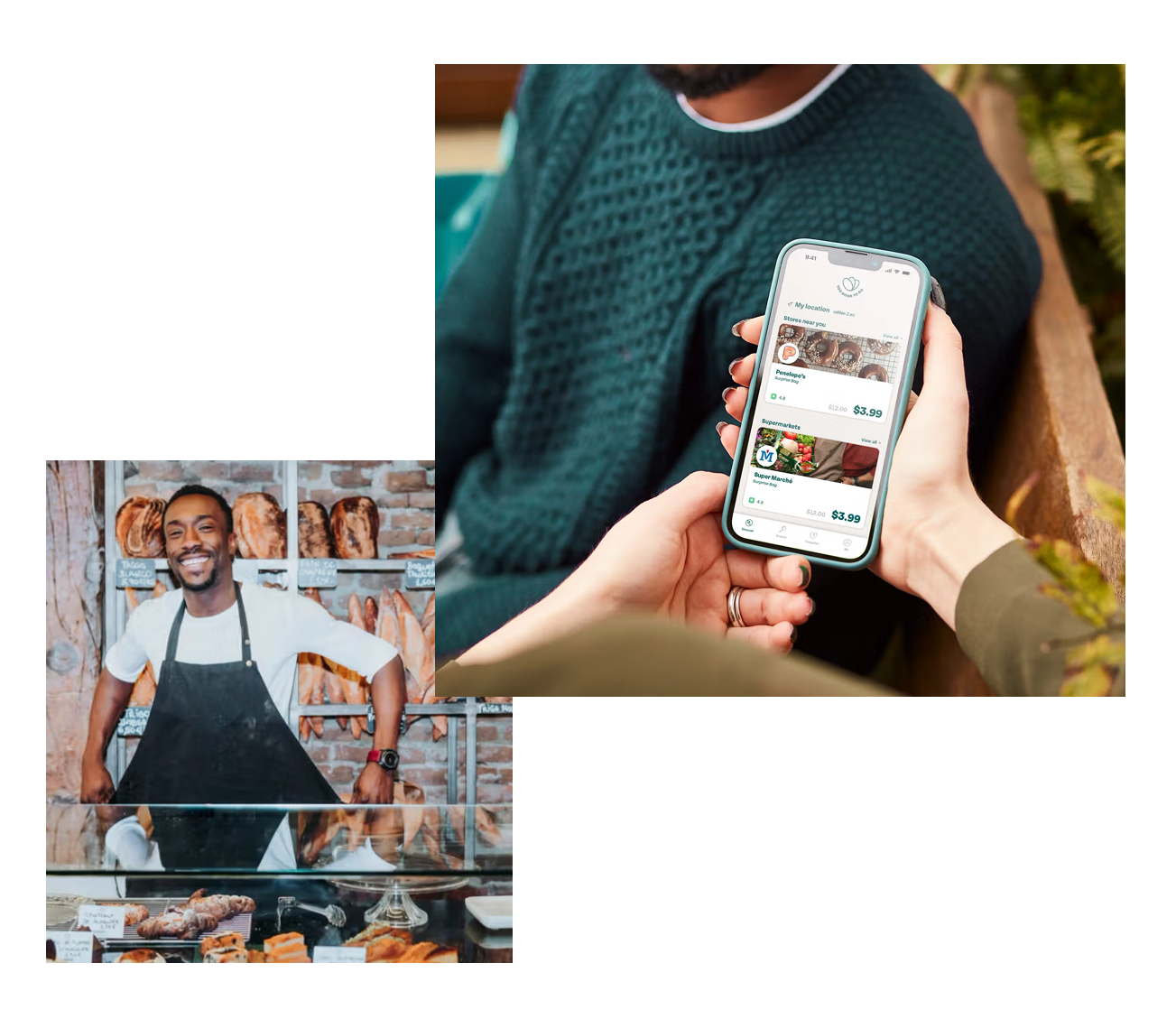
Too Good To Go is a sustainable app that helps people buy surplus and near-expiry food at a discounted price. Its popular “Surprise Bag” bundles unsold items revealed only at pickup, you can find any food and collect it from various supermarkets and restaurants.
While exciting, this unpredictability often frustrated users and reduced repeat use. Our team redesigned the experience by turning these bundles into more predictable, repeatable meals, making sustainable choices easier, more reliable, and enjoyable, while fostering a community around food waste reduction.

Role: Lead Product Designer on a team of three
Timeline: 6 weeks
Tools used: Figma
Main Methodologies Used
Discover: TGTG Analysis, Content Audit, Heuristic Evaluation, Competitive Analysis, Qualitative Interviews, Affinity Mapping, I-Statements. Define: Personas, Retrospective User Journey Map, Empathy Map, User Flow Map.
Ideate: Problem Statements, HMWs, Crazy 8’s, Feature Prioritisation, User Flows, Sketches, Mid-Fidelity, Usability Testing.
Deliver: High-Fidelity Design, Design System.
For more detail, view the presentation, prototype, or research via the links below, or scroll down for the full case study.


Case Study Snapshot

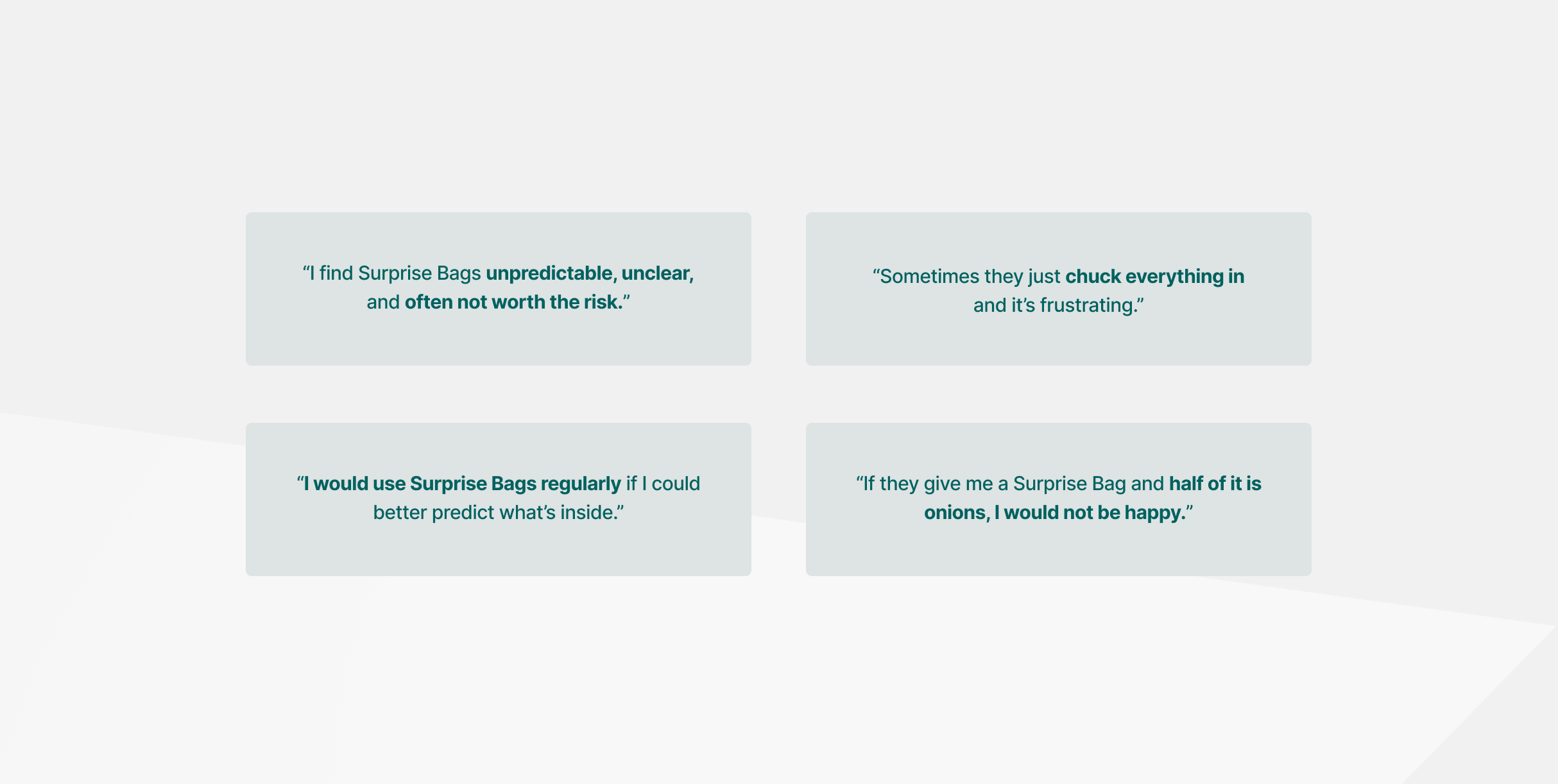
The Problem: Users struggled with “Surprise Bags” unpredictability, making meal planning difficult and limiting repeat use.
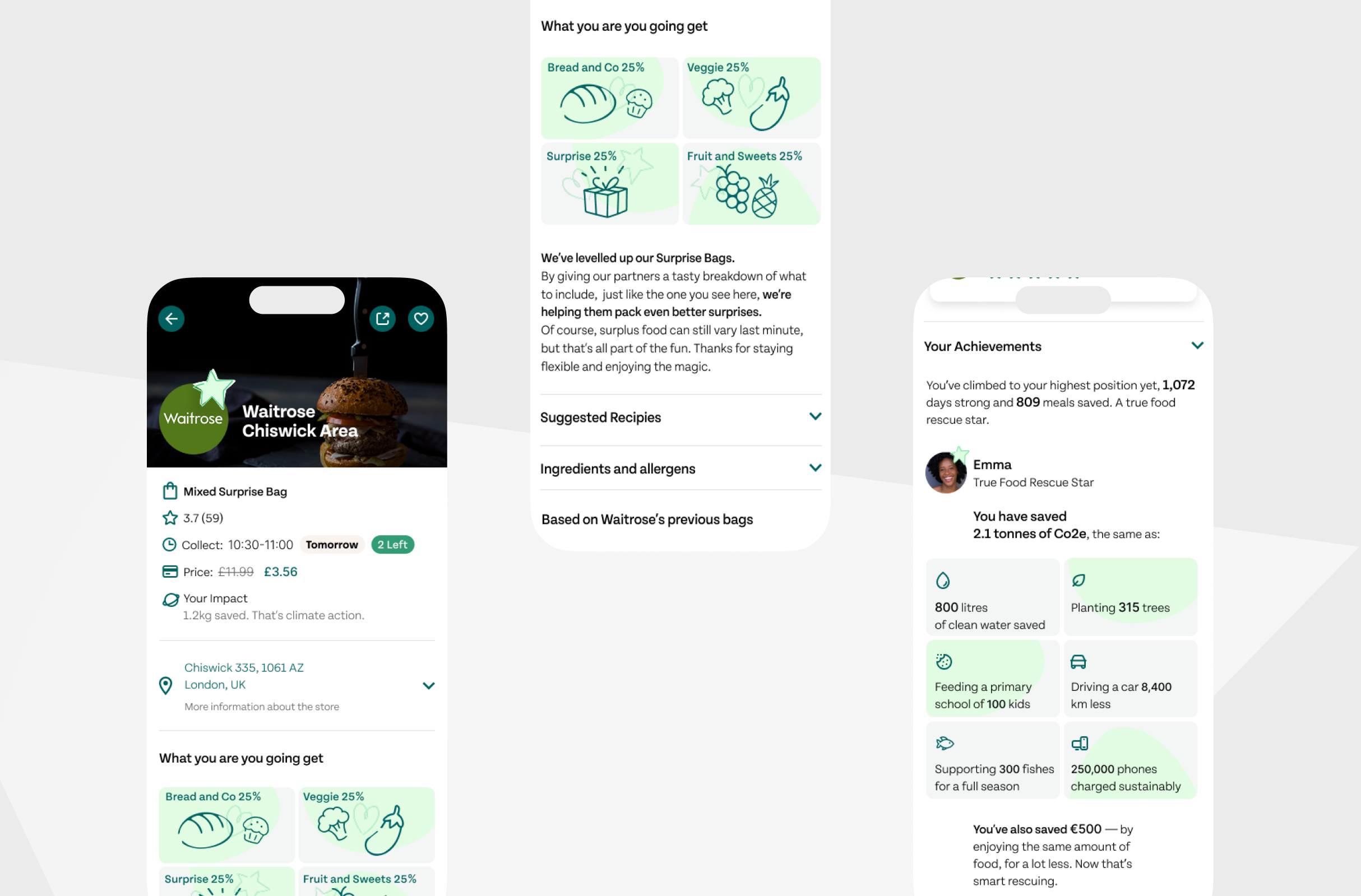
The Solution: The main improvement is the introduction a Visual Panel showing estimated bag contents to make Surprise Bags more reliable.
We also polished the Design, added Light Gamification like CO₂ Impact Card Indicator, Suggested Recipes, a Local Community Section, and an Onboarding Experience. All designed to boost confidence, engagement, and repeat use.
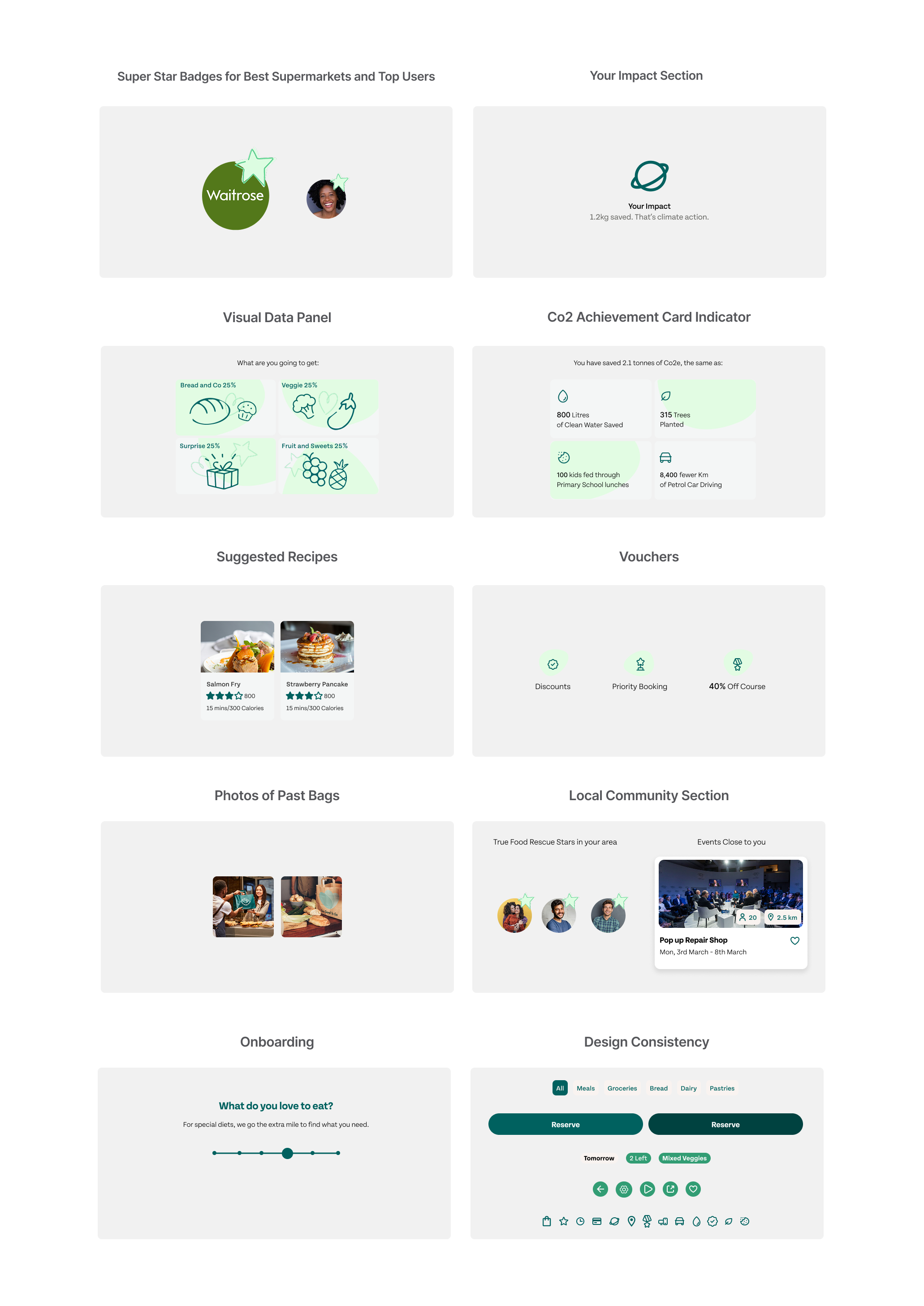
The Impact: The Visual Panel previews bag contents, building trust, driving repeat use, and helping users feel empowered. Onboarding, Gamification, Achievement Features, and Community Engagement further foster confidence, purposeful behaviour, and connection to the climate-conscious community mission.
See detailed design changes on video above or in the Deliver Phase further down.
Obstacles: The hardest moments came when testing didn't give us answers, it gave us more questions. Each round surfaced more than one redesign could fix: filters, categories, ratings, photos, pickup, refunds. It was stressful to accept we couldn't solve everything and had to choose. And screens we thought were finished kept breaking under fresh testing, sending us back to rework what we'd already called done. That pressure was uncomfortable, but it's exactly what forced the design to keep improving instead of settling.

My contribution
I organised the team’s workflow, ensuring a clear process from research to design, and maintained a high standard of quality across all outputs. I originated and drove the key concepts, including the Visual Panel, Achievement Cards, and Vouchers, and designed all new elements. I also oversaw the onboarding developed by another team member, ensuring it aligned with the Too Good To Go brand.

Detailed Case Study, Empathise & Discover

What’s To Good To Go?
Too Good To Go is a mobile app that helps reduce food waste by connecting users with restaurants, bakeries, and grocery stores that have leftover food at the end of the day. Users can purchase “Surprise Bags” at discounted prices.
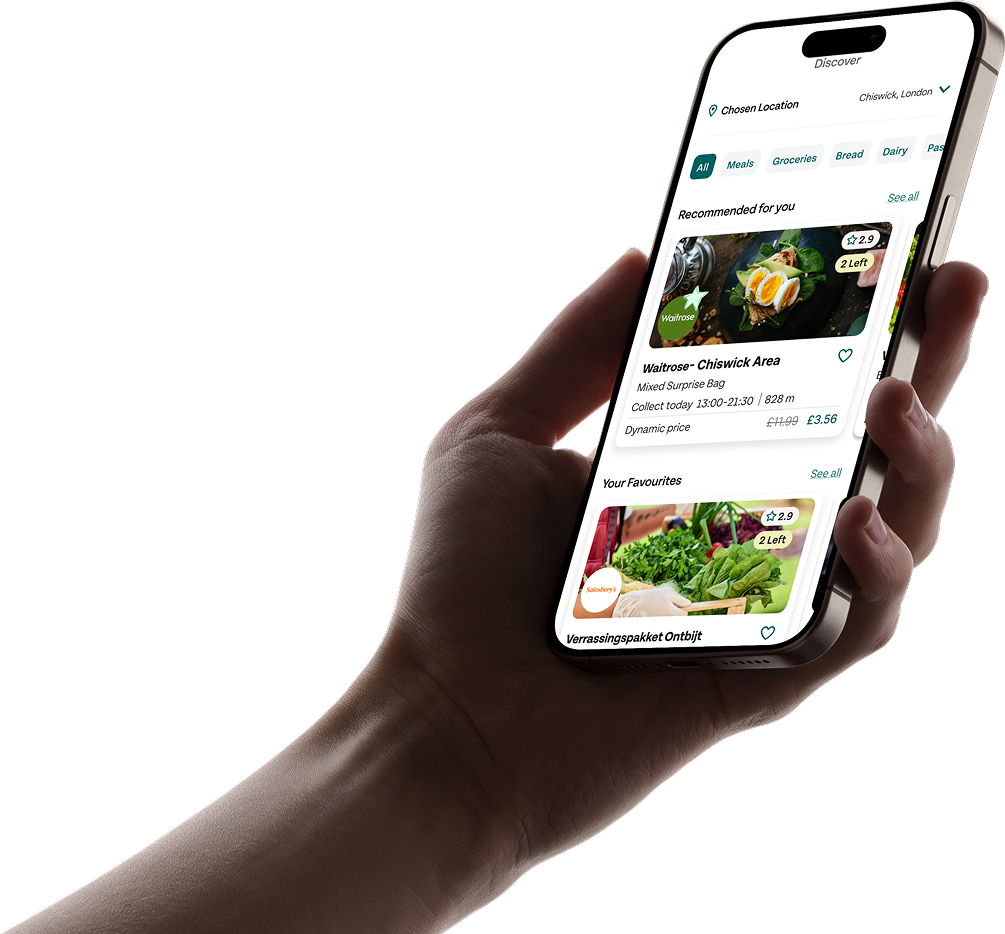
What’s a “Surprise Bag“?
A “Surprise Bag” is a bundle of unsold fresh food, revealed only at pickup, saving food and giving customers a deal.
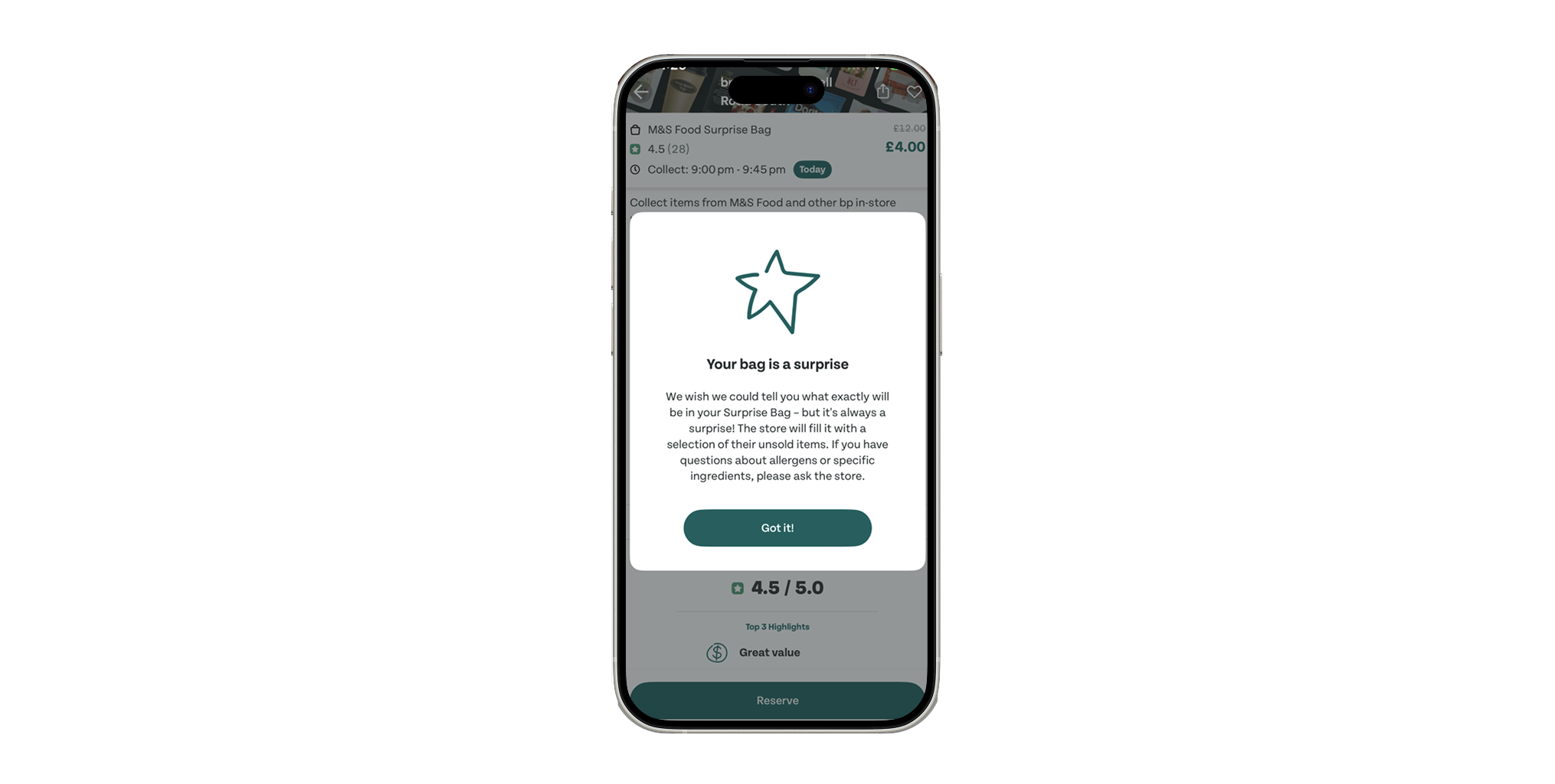
The Challenge
TGTG asked us to better connect users with sustainable choices, drive repeat use, and strengthen the waste-reduction community.
High-Level Goals
Increase engagement beyond first use
Strengthen food waste impact
Build a stronger sustainability community
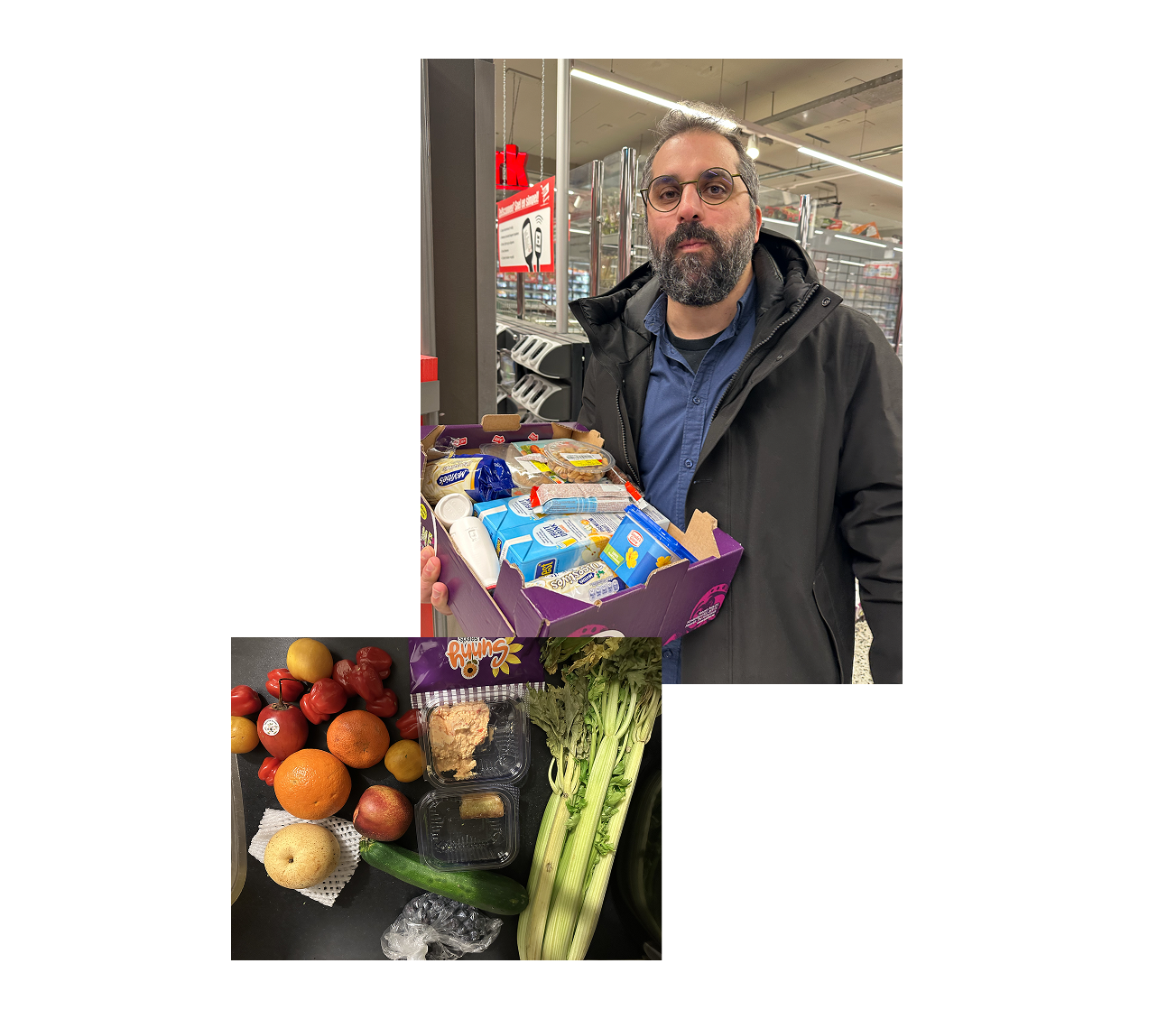
First-hand testing
We tested the Too Good To Go service to better understand and empathise with real user experiences.
Competitor Analysis

Competitor Strengths
Clear food visibility, dietary filters, personalised recommendations, loyalty perks, sustainability tracking.
Competitor Weaknesses
Poor integration of sustainability & commerce, limited dietary support, weak community features, unclear freshness/expiry info.
Opportunities for Too Good To Go
Add dietary/allergen filters, improve transparency, personalised suggestions, sustainability track, loyalty & community features.
Check more at Research
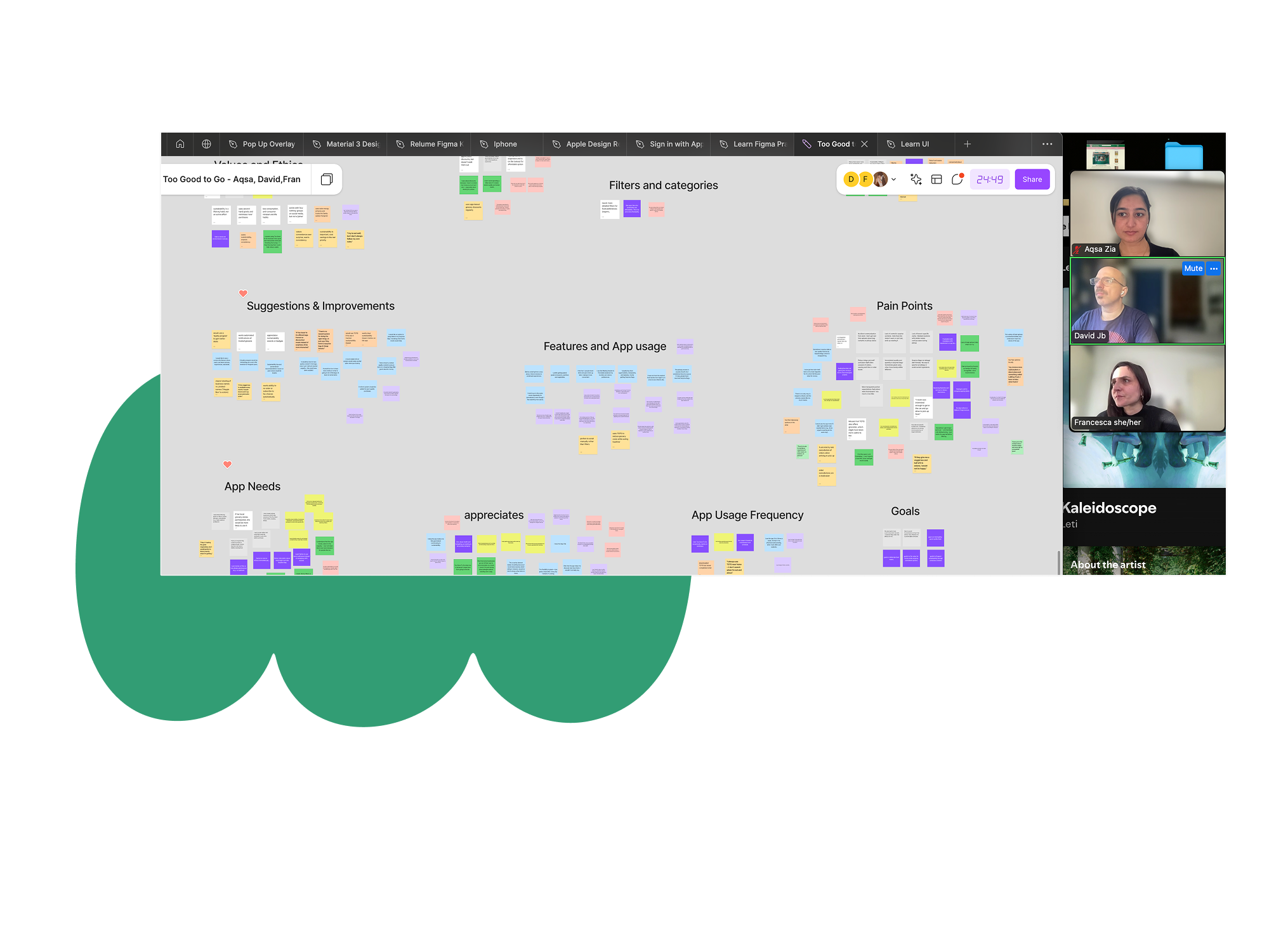
User & stakeholder interviews
By interviewing 15 users, sustainability-driven, deal-seekers, and current or former TGTG users, clear patterns emerged.
Key Insights/Pain Points
Limited filters reduce user control.
No control over bag quality or quantity, with high unpredictability.
Reviews feel unreliable.

Define Phase

Which problem has the most impact?
One issue stood out above the rest:
Users had no control over the quality or quantity of items.
“Sometimes they just chuck everything in and it’s frustrating.”
The problem is that Emma, our Persona, needs more transparency in Surprise Bags, as the unpredictability of contents makes it difficult to plan and cook meals effectively, leading to potentially less impactful food saving.
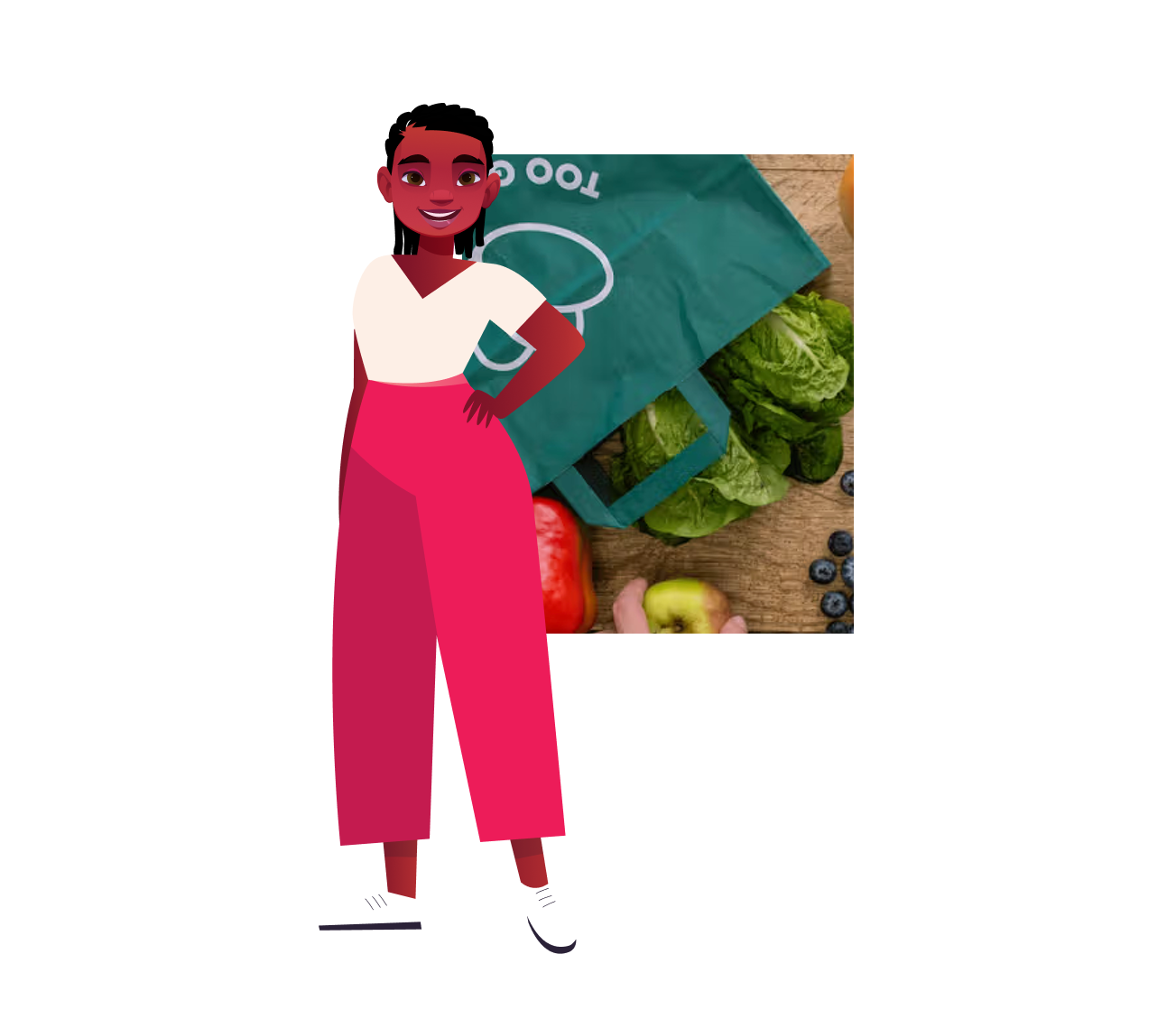
Who is Emma?
Emma is a Mindful Foodie who loves discovering good food that aligns with her values: sustainability, quality, and convenience.
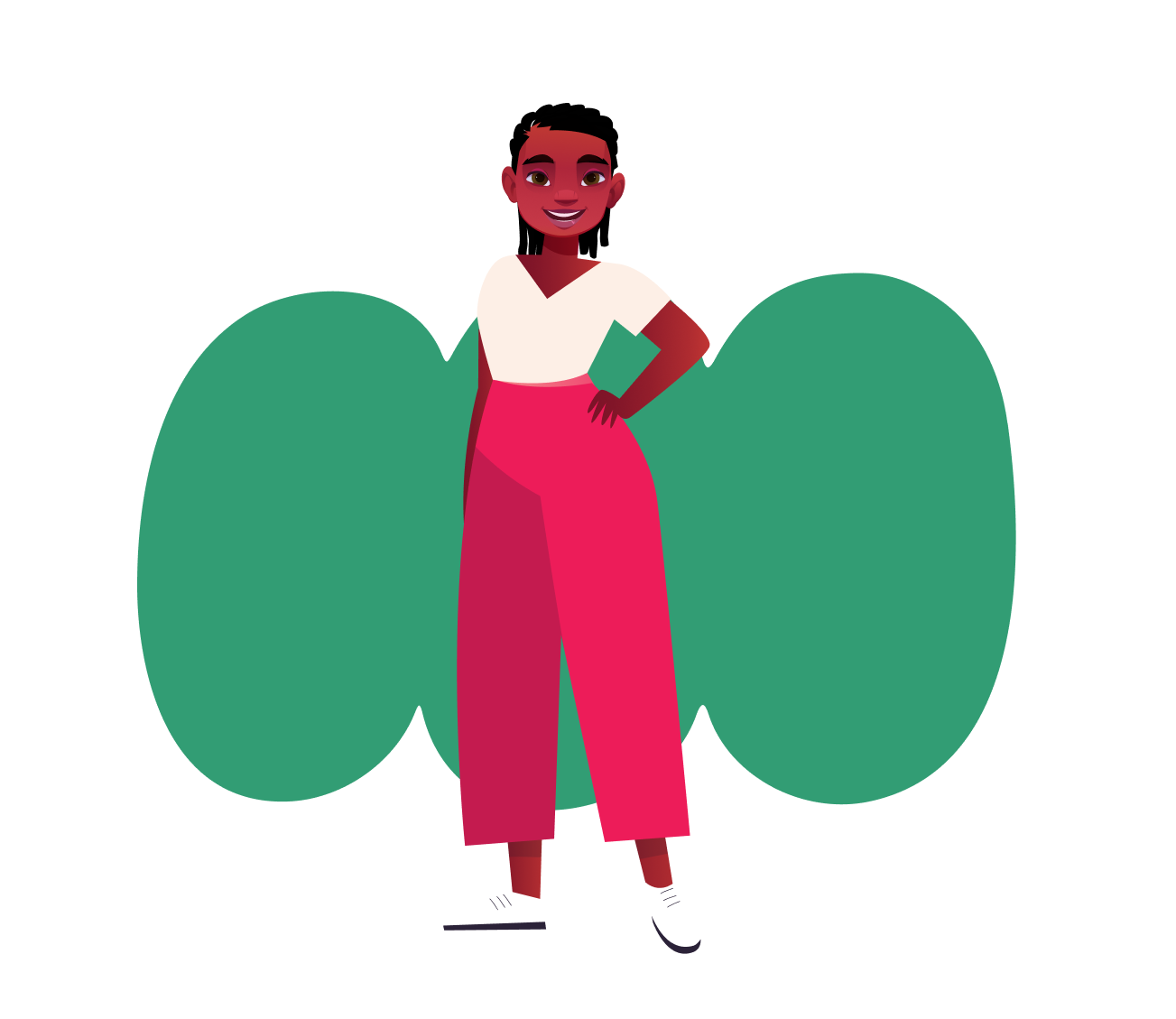
What are Emma Goals?
Find high-quality, affordable, and sustainable food options.
Have a bit more control over what she purchases.
Support local businesses and discover trustworthy sellers.
What are Emma’s Behaviours?
Prefers slightly more predictable meal options over surprise deals
Tries to reduce food waste through mindful cooking.
She likes to see ratings to help guide decisions
What are Emma’s needs?
Clearer content and quality control for Surprise Bags
Detailed user reviews and photos of shops

Ideate and Design Phase

Shaping a Smarter TGTG
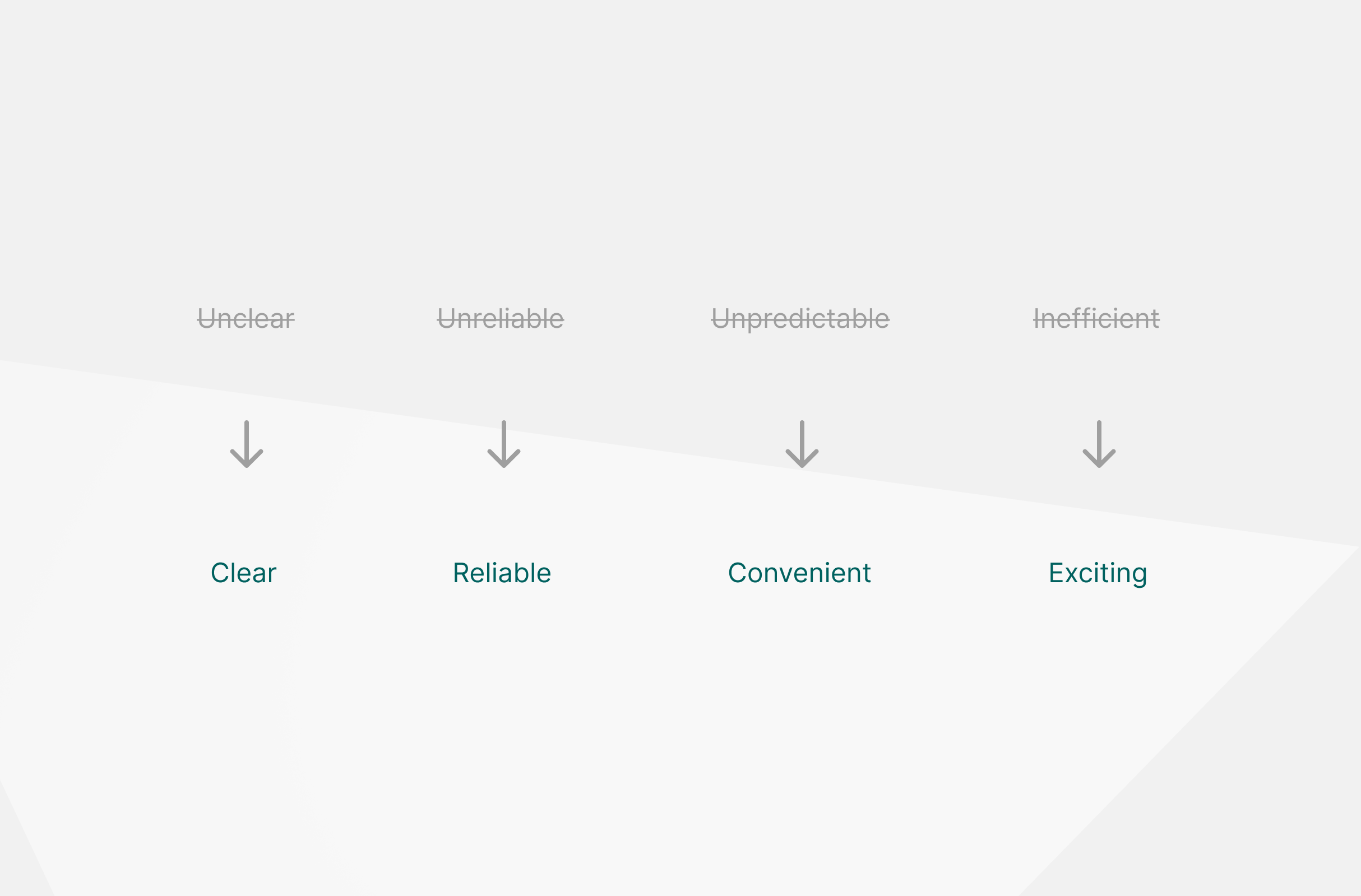
We wanted the new Too Good To Go experience to feel clear, reliable, exciting and convenient, turning unpredictability into confident, conscious choices.
The Design Solution!
How did we give Emma a rough idea of what was in the “Surprise bag”?
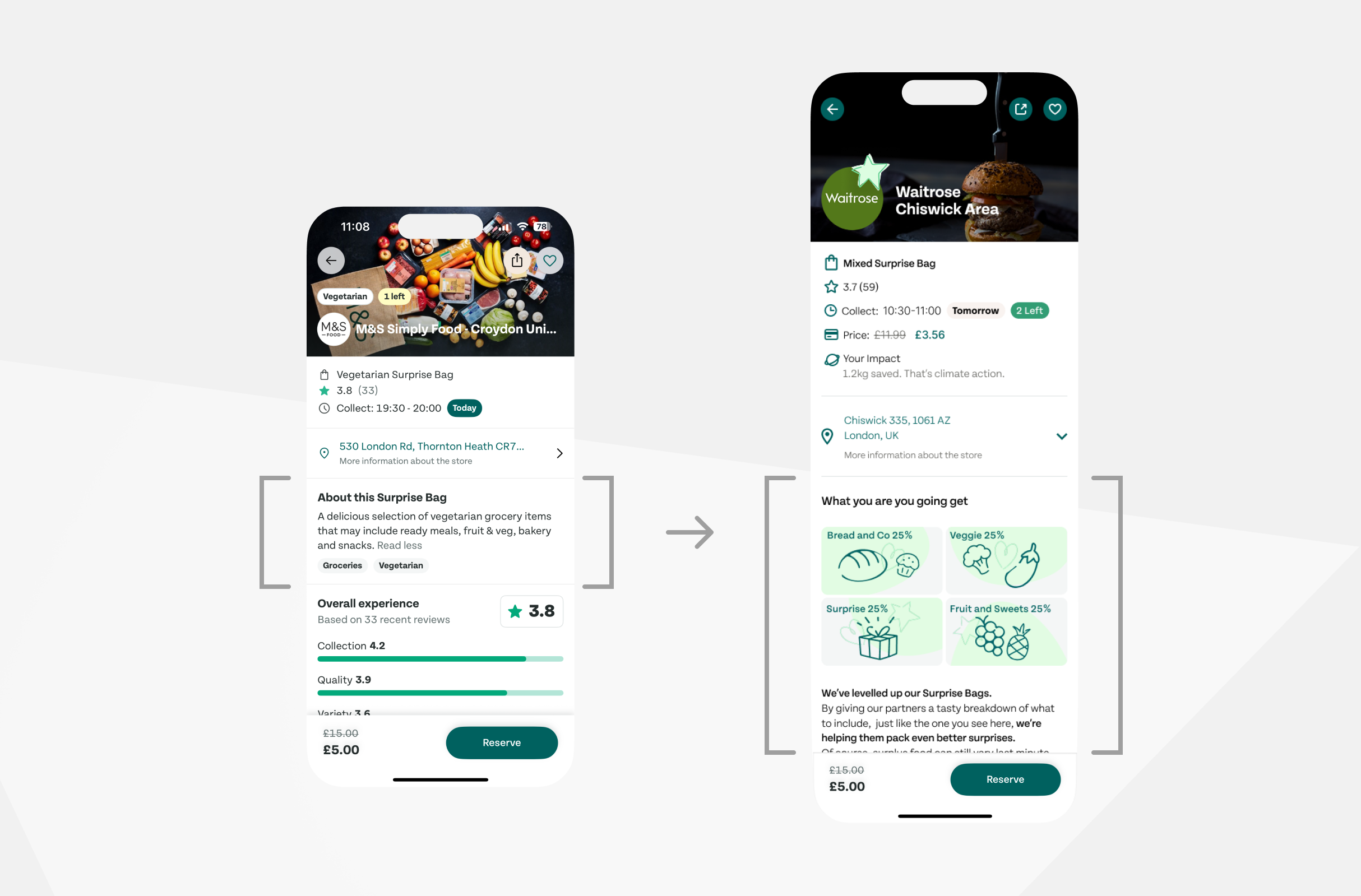
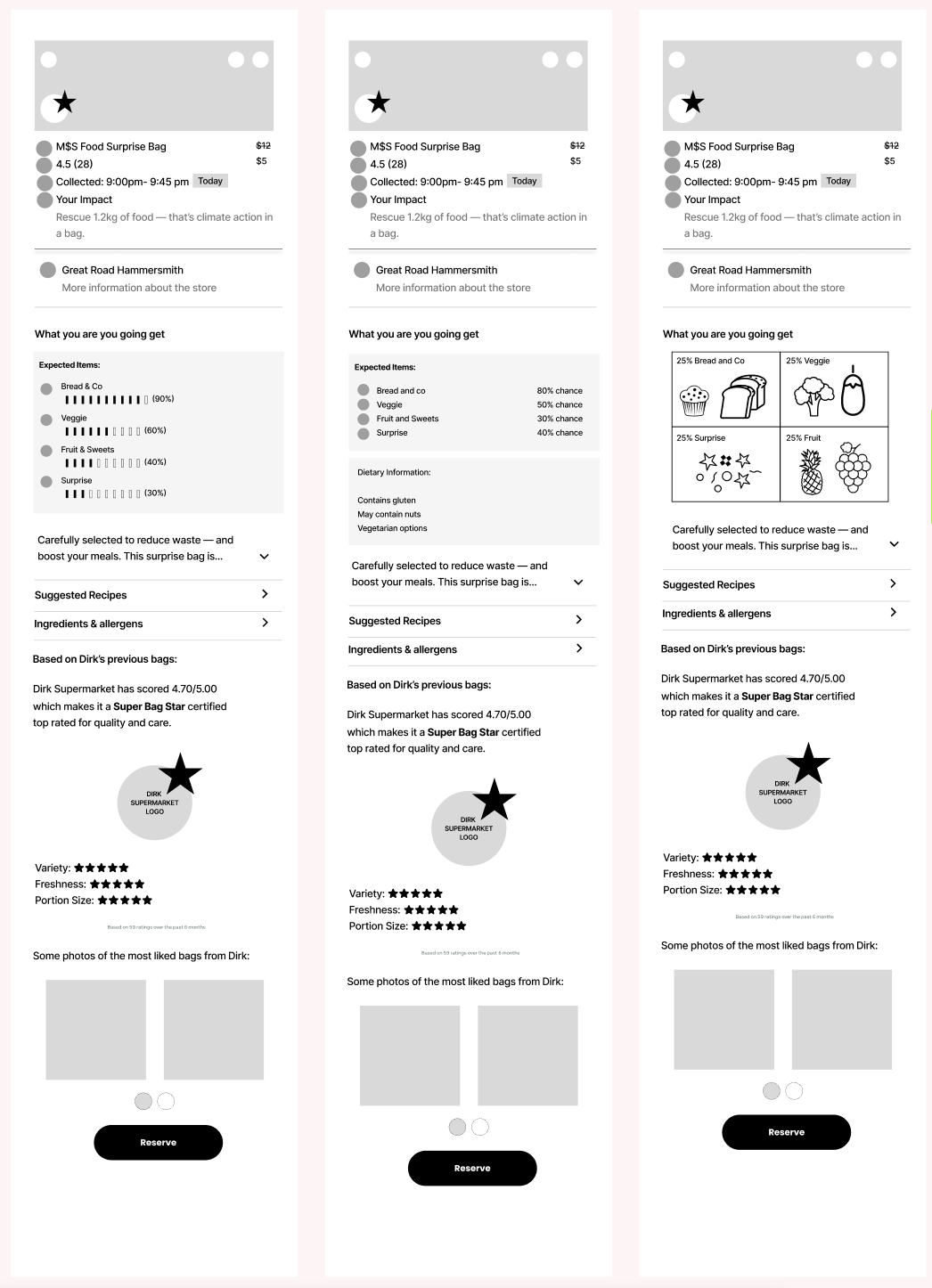
We added a new section on the “Surprise Bag'“ page called “What You’re Going to Get” that features a Visual Panel showing estimated contents.
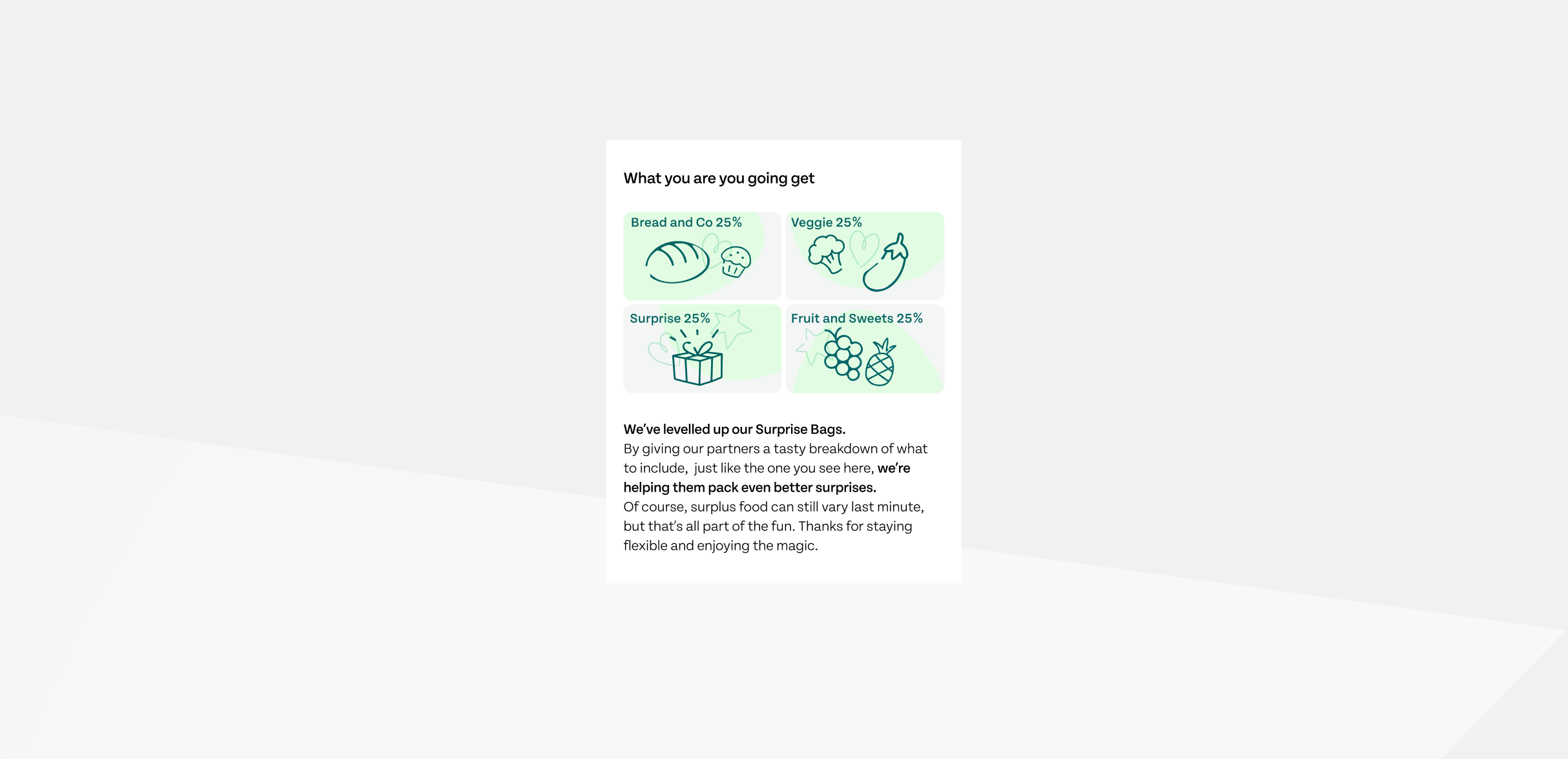

The Visual Panel shows users what to expect and helps businesses prepare consistent, high-quality Surprise Bags.
From
“I have no idea what’s in my bag”
To
“I know roughly what I’ll get, what I can cook with it, and how to make it work with what’s already in my fridge.”
We also polished the Design, added Light Gamification like CO₂ Impact Card Indicator, Suggested Recipes, a Local Community Section, and an Onboarding Experience. All designed to boost confidence, engagement, and repeat use.
See all on the Deliver Phase Below!
From
“I don’t understand my impact and how to use leftovers”
To
“I feel part of a community taking action on climate change while having fun eating varied meals.”
We improved clarity, trust, and engagement across the experience.
Mid-Res Prototype
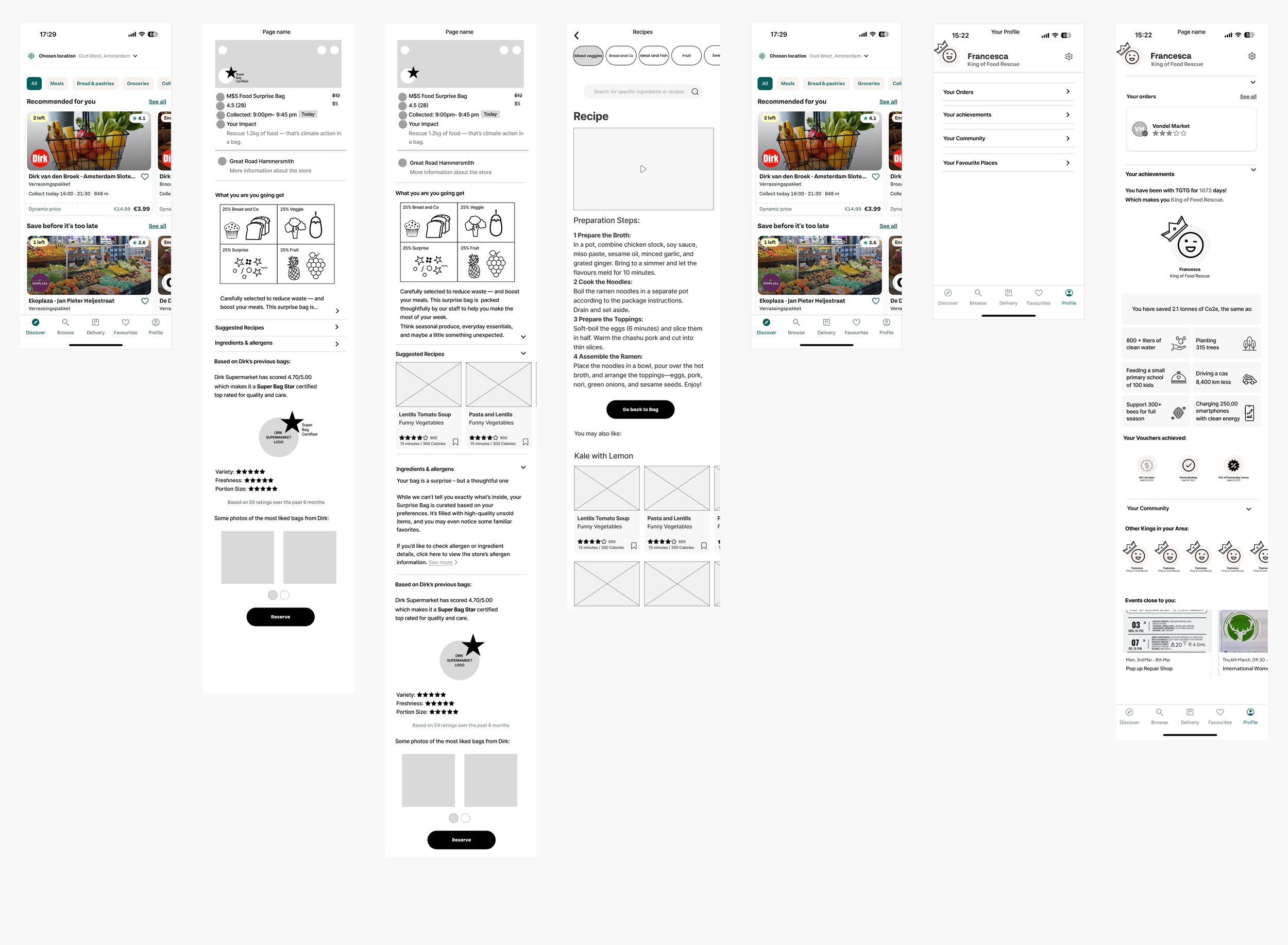
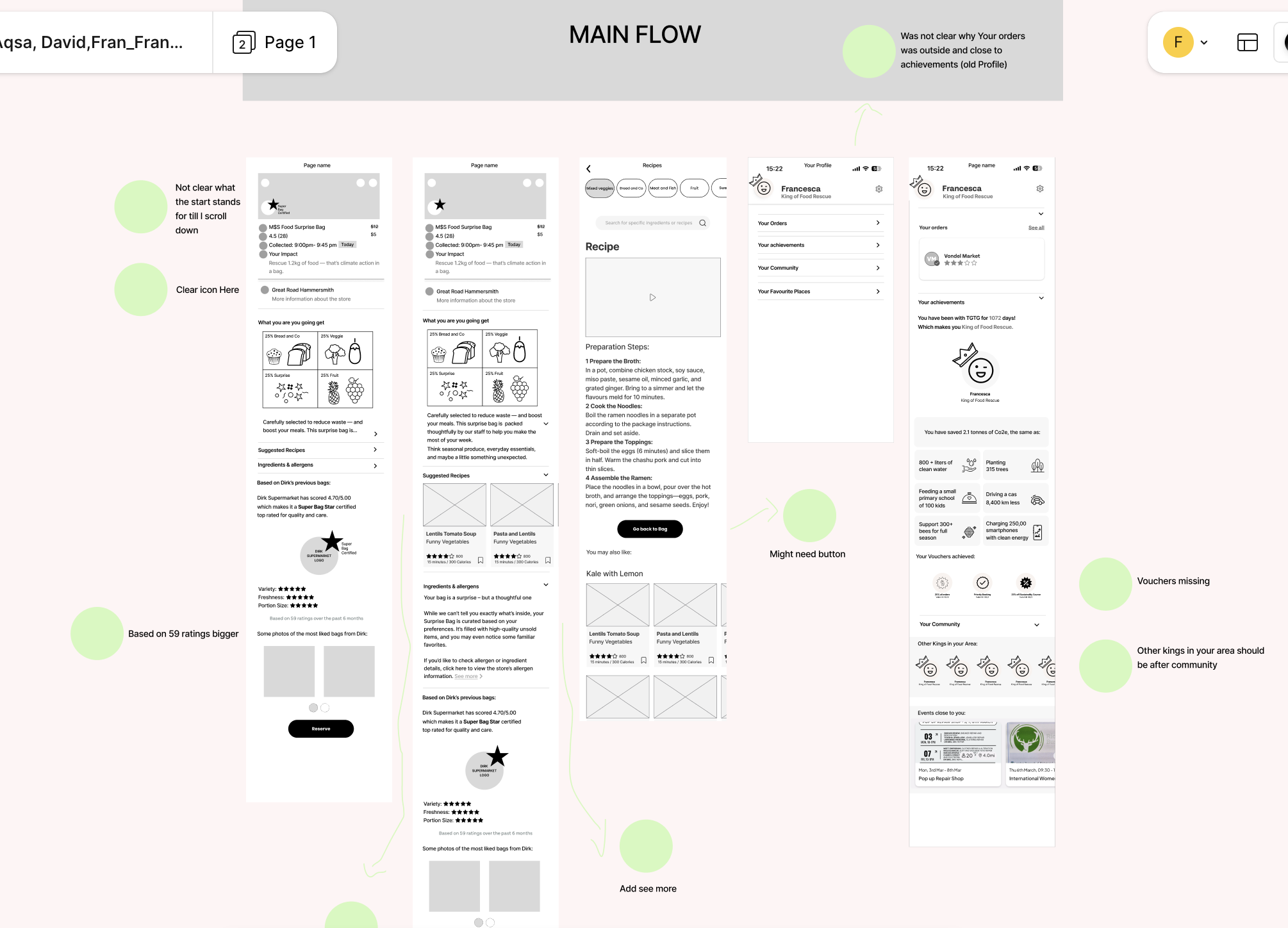
The mid-fidelity prototype addressed the brief holistically and allowed usability testings to validate and improve our designs and approach.

Deliver Phase

Design Improvements
Product Page Features
Before and after
We improved clarity and trust by refining typography, spacing, icons, and layout hierarchy.

Your Impact Section
We added an Impact Section to showcase food saved and boost community engagement.
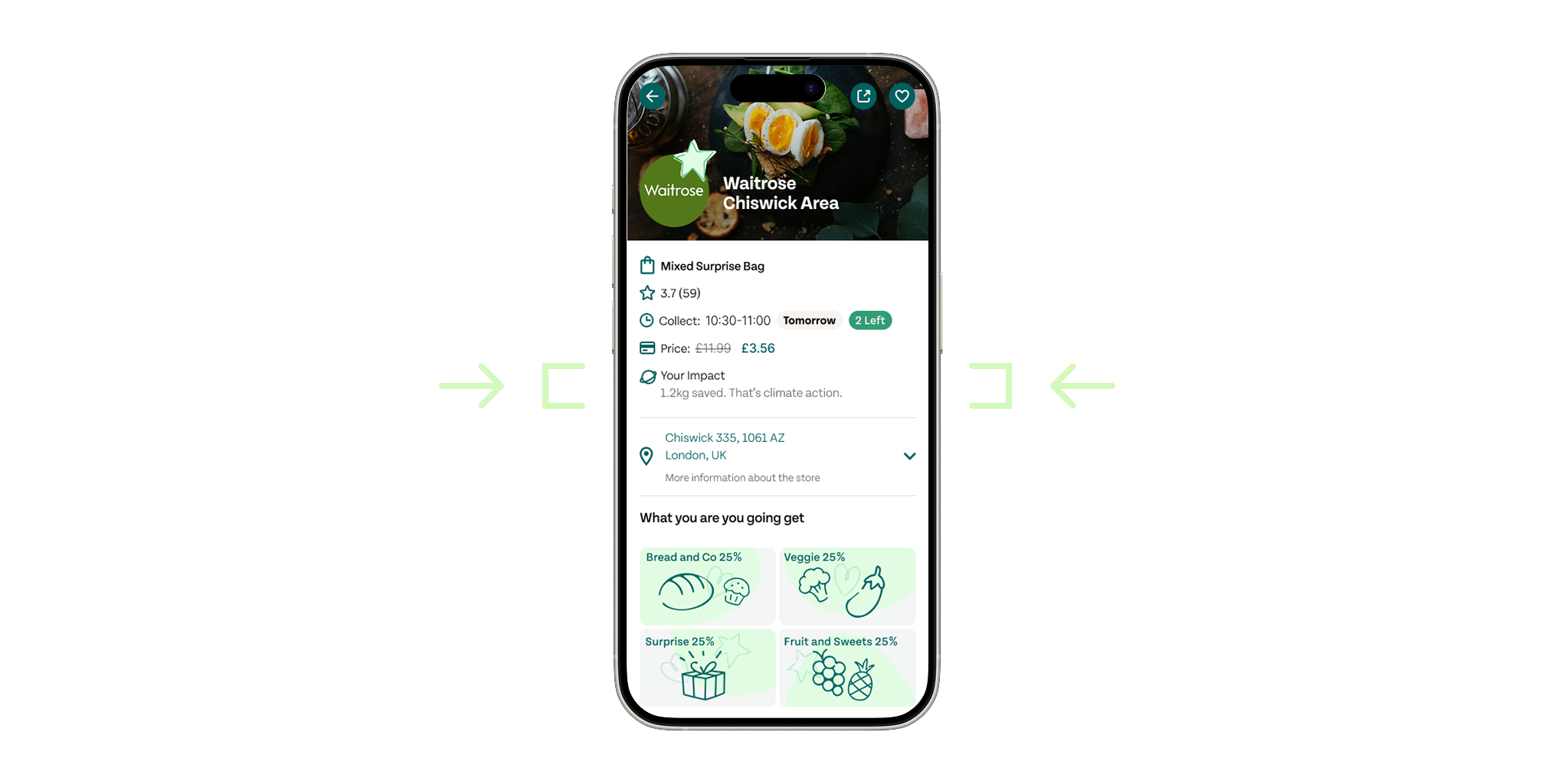
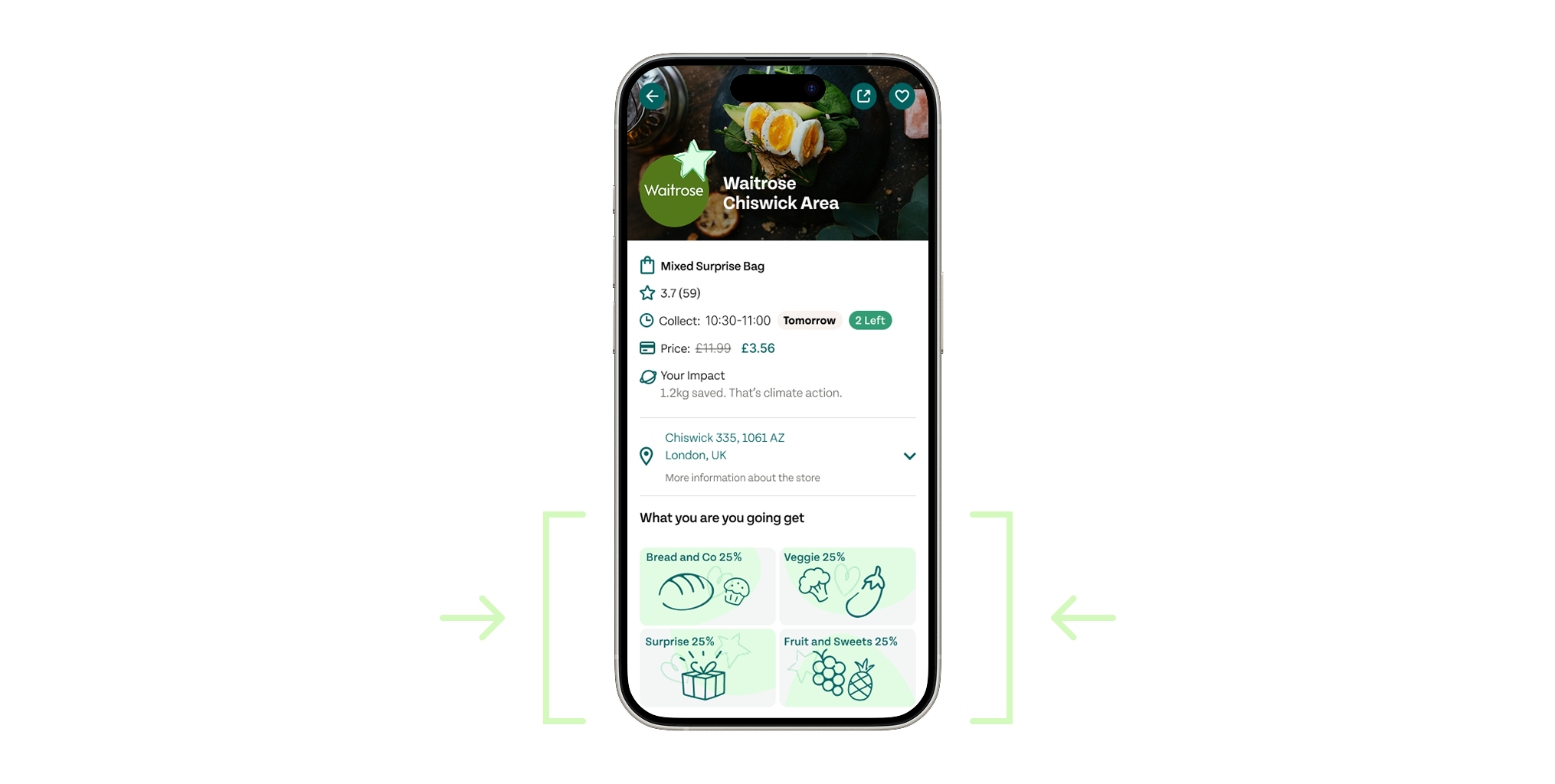
Visual Data Panel
The Visual Data Panel shows bag contents, building user confidence, repeat use, and business consistency.
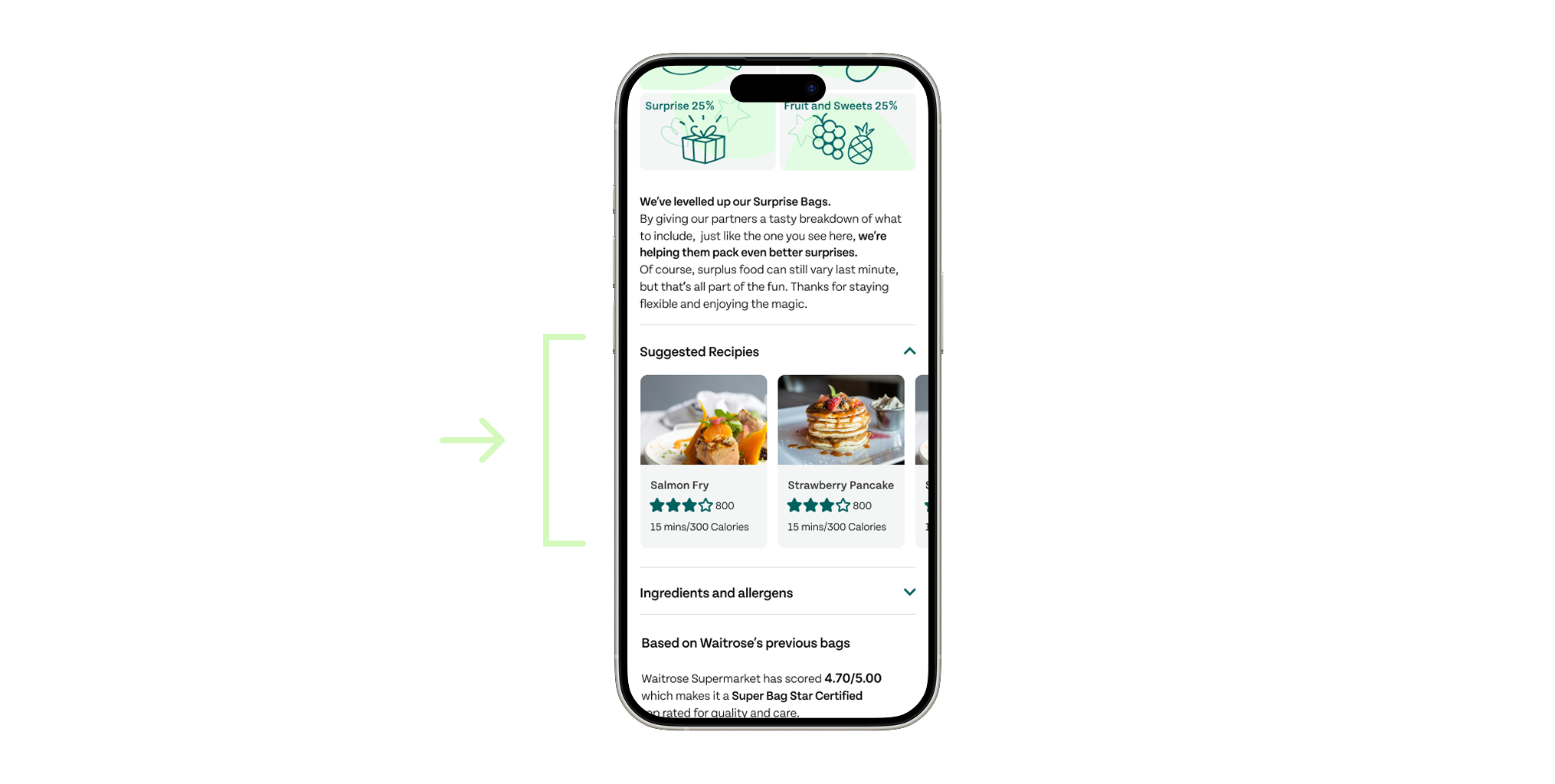
Suggested recipes
Suggested recipes help users cook surplus food, stay engaged, and feel guided.
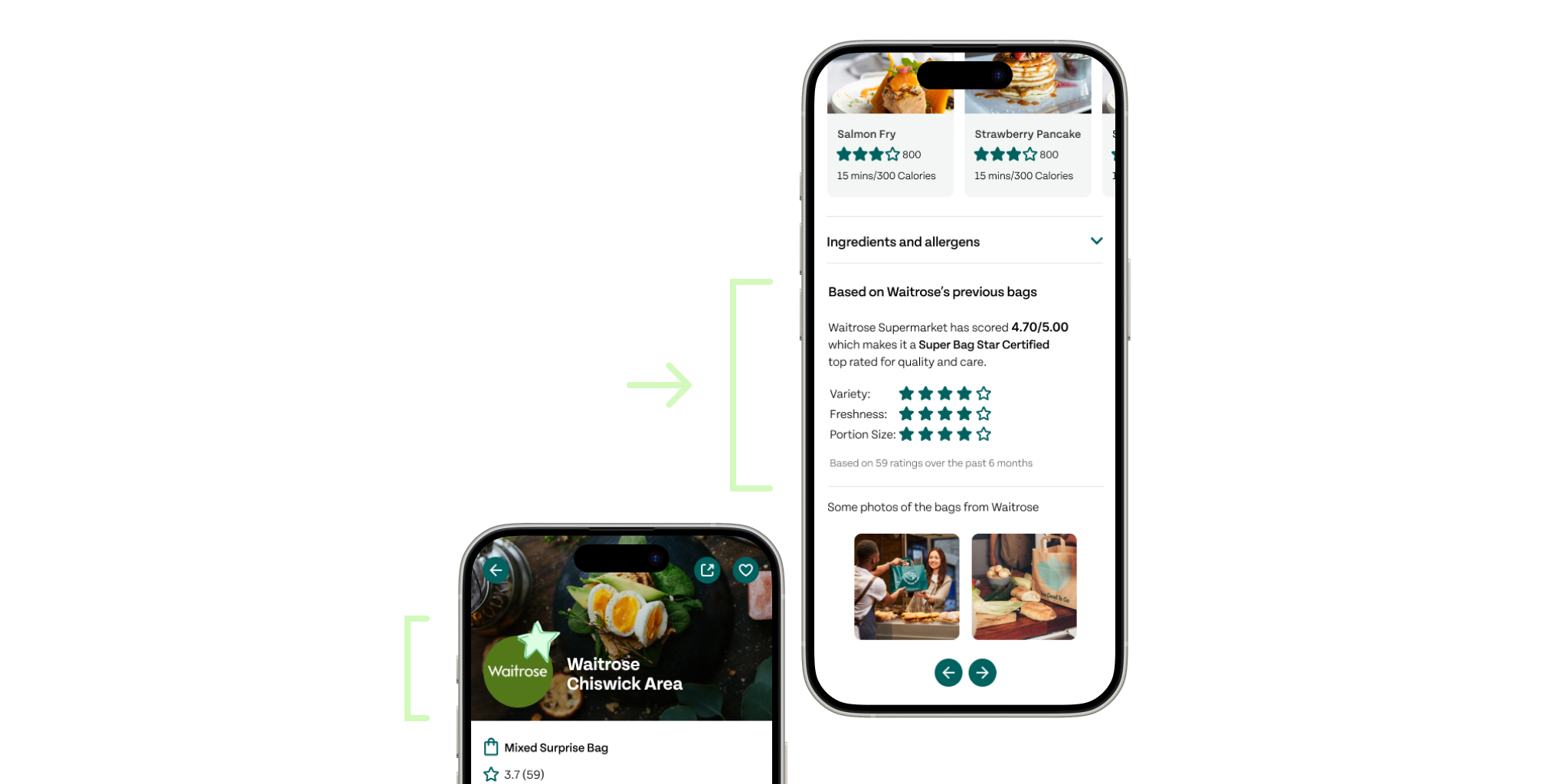
Super Star Bag Badge
Super Star Bag Badges highlight supermarkets and restaurants with the best bags based on reviews, boosting trust,
quality, and transparency.
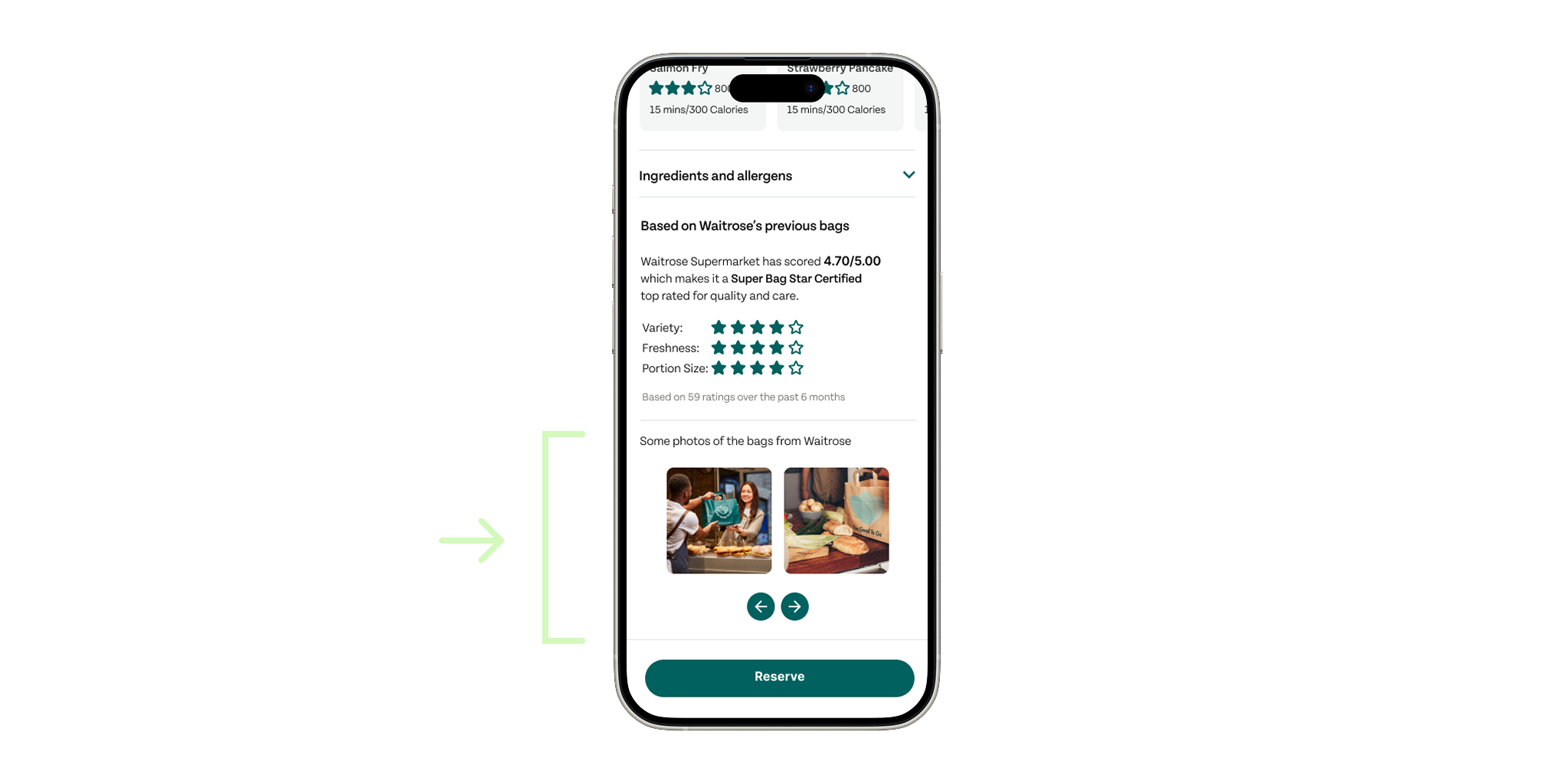
Photos of past bags
Past bag photos enhance trust, transparency, and ease of use.
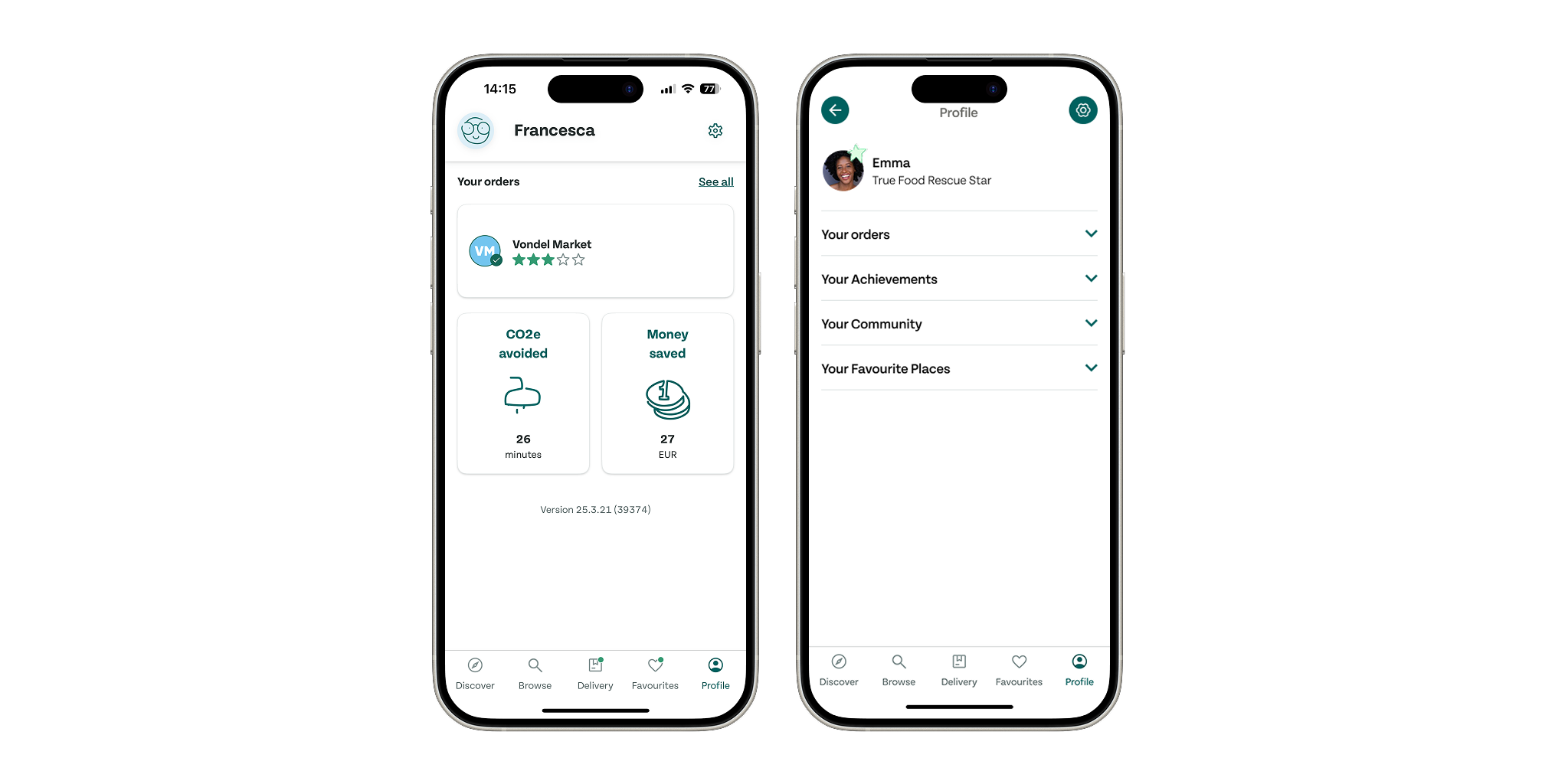
Profile Page Features
Before and after
We refreshed the profile page for a more intuitive, user-friendly experience.
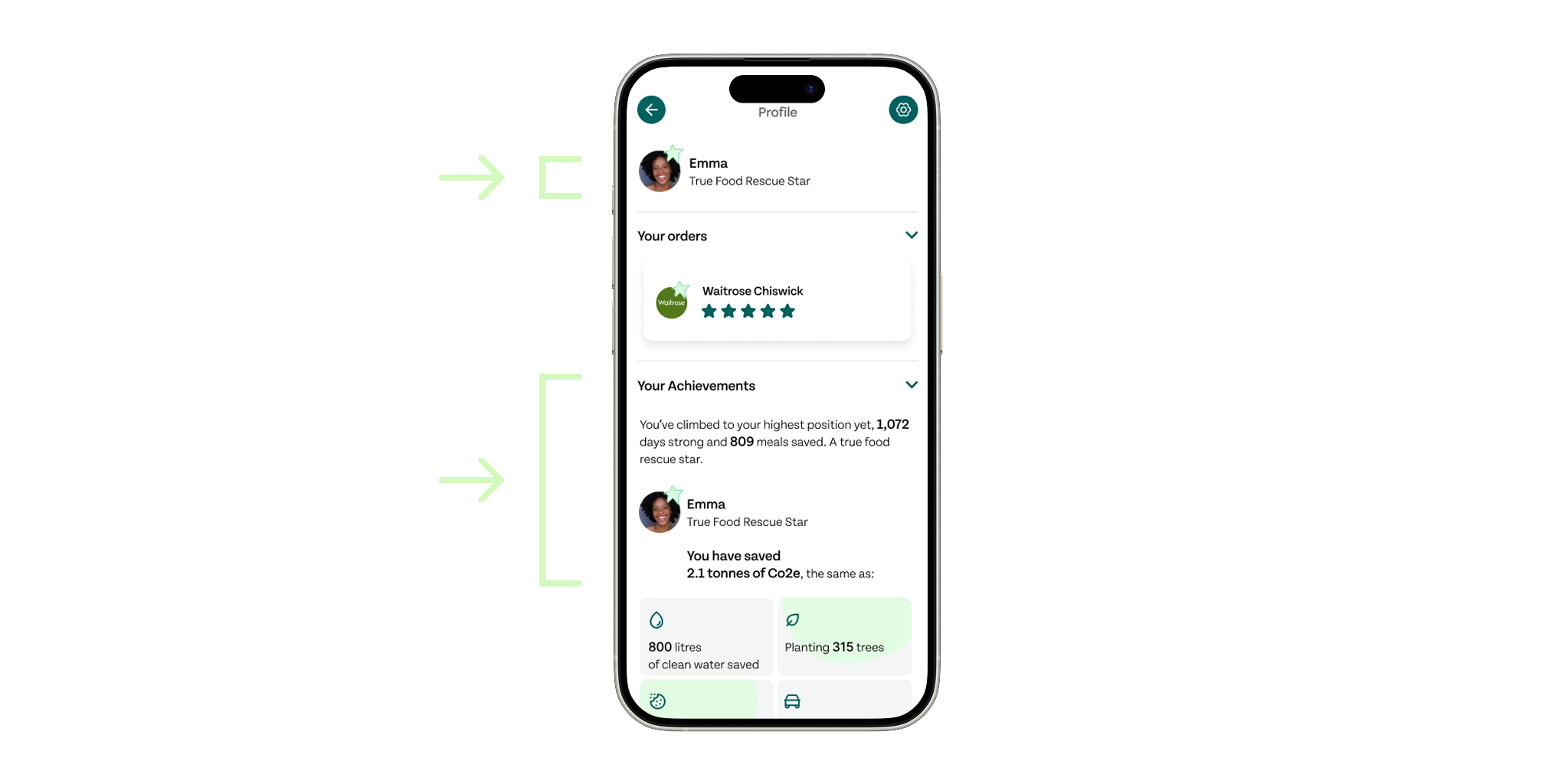
True Food Rescue Achievement - Super Star Bag Badge
Emma earned a Star Badge as Top User, celebrating her impressive food rescue impact and boosting pride, purpose, and repeat use.
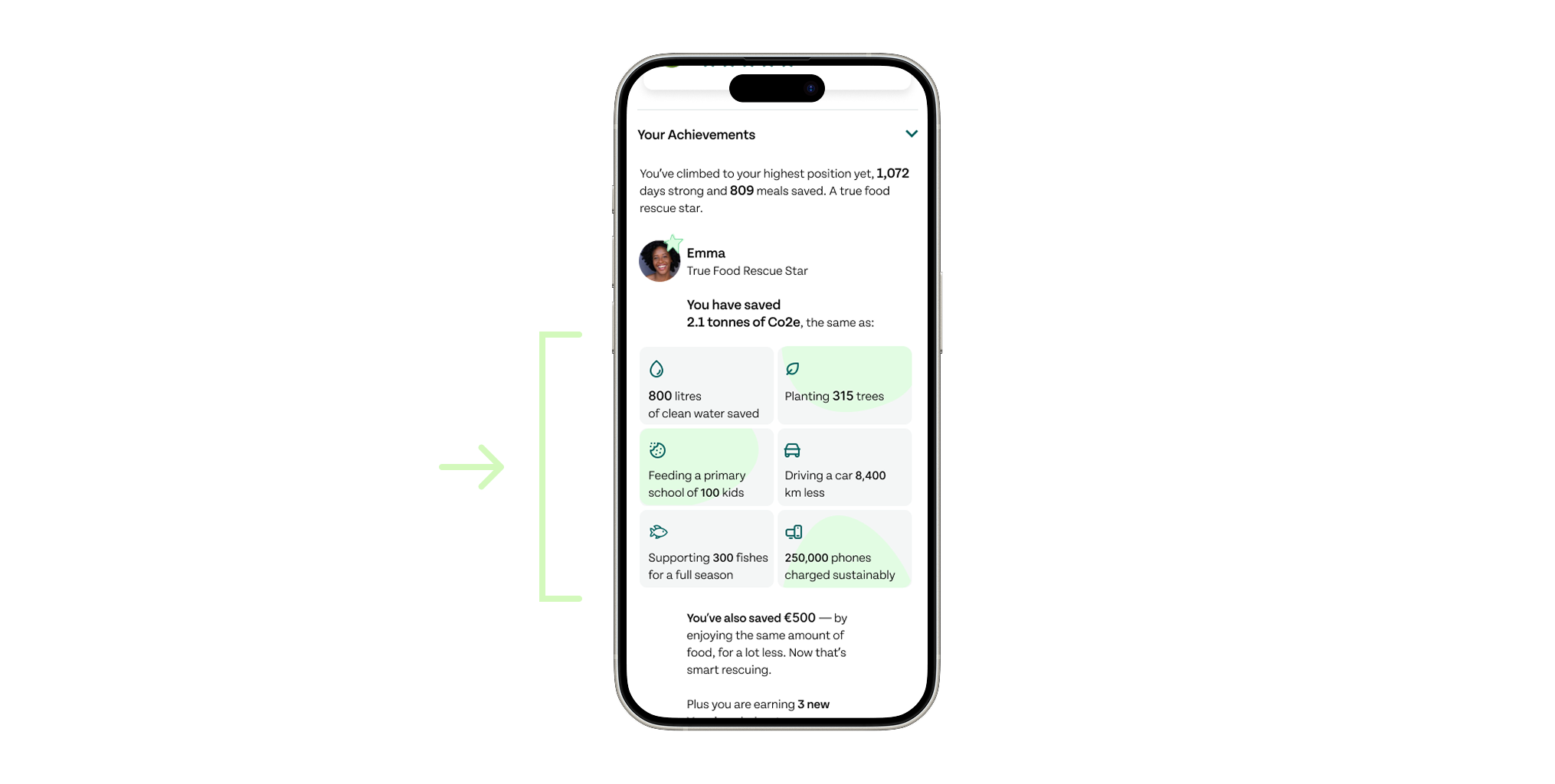
Achievements Card Indicator
Achievements Cards show CO₂ saved in a tangible way, boosting purpose, engagement, and community.
Vouchers
Vouchers reward top users, boosting loyalty, repeat use, and recognition.
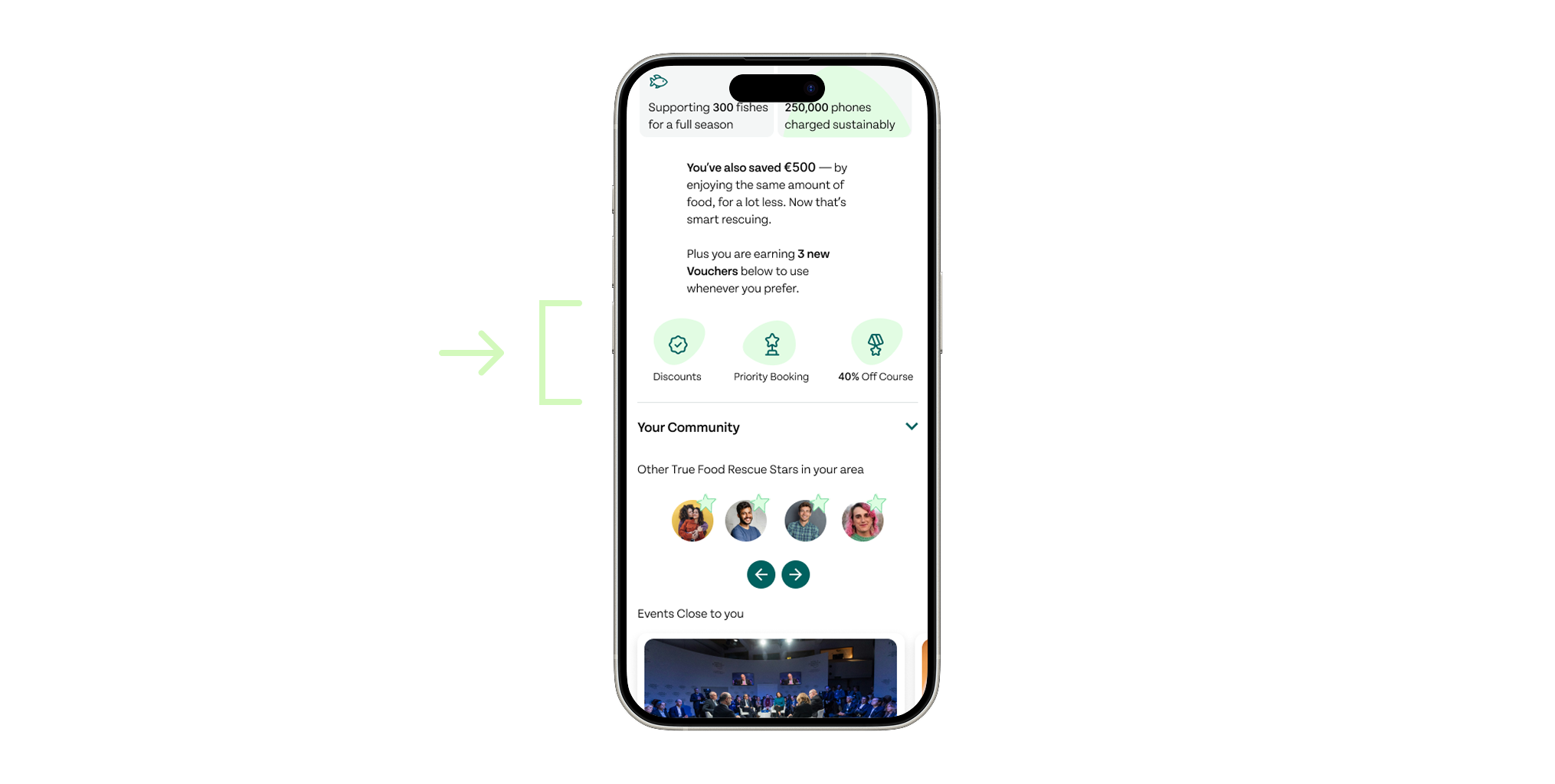
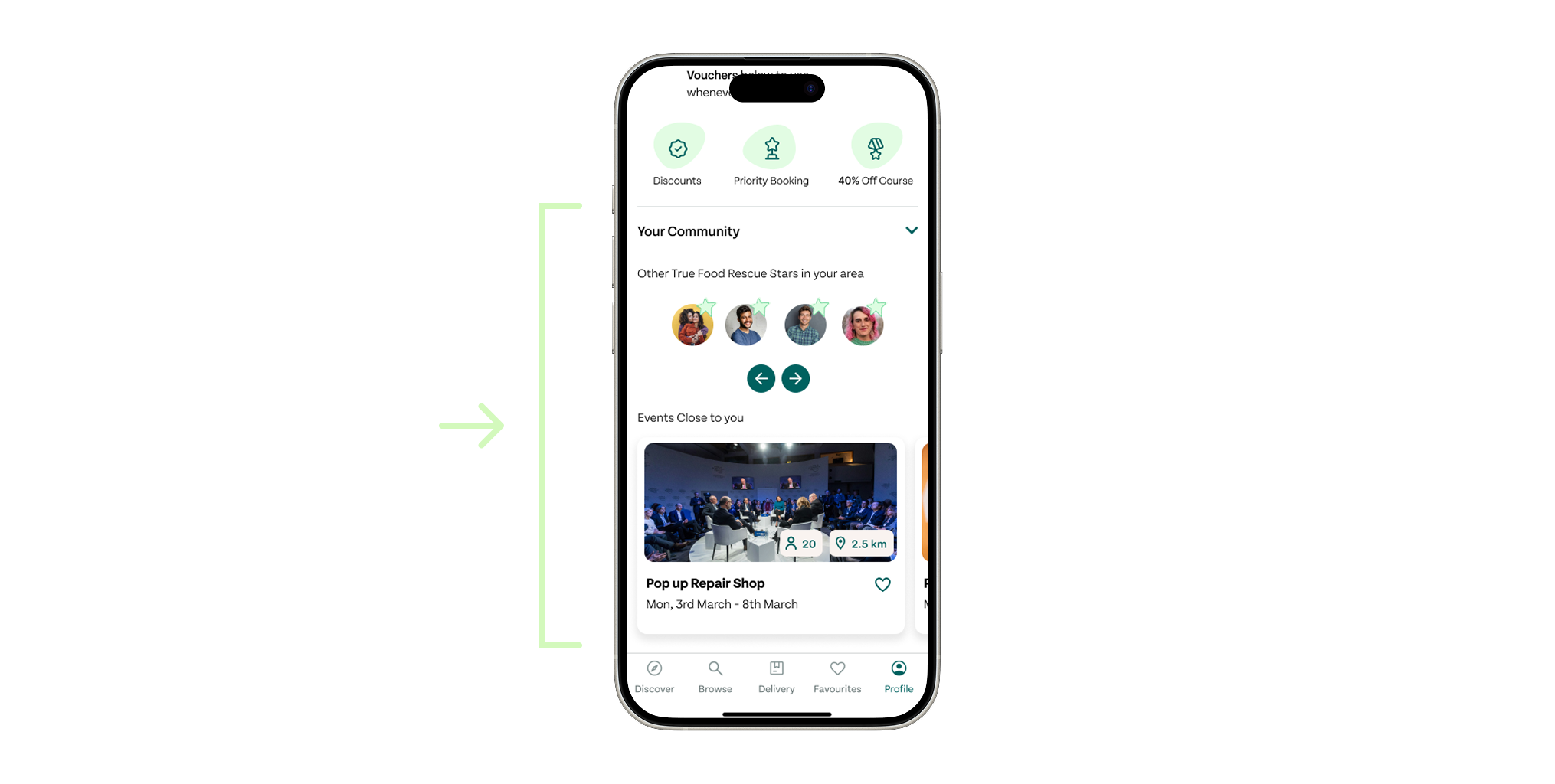
Community Feature
Community Feature links users to Local Stars and events in your area, fostering engagement and belonging.
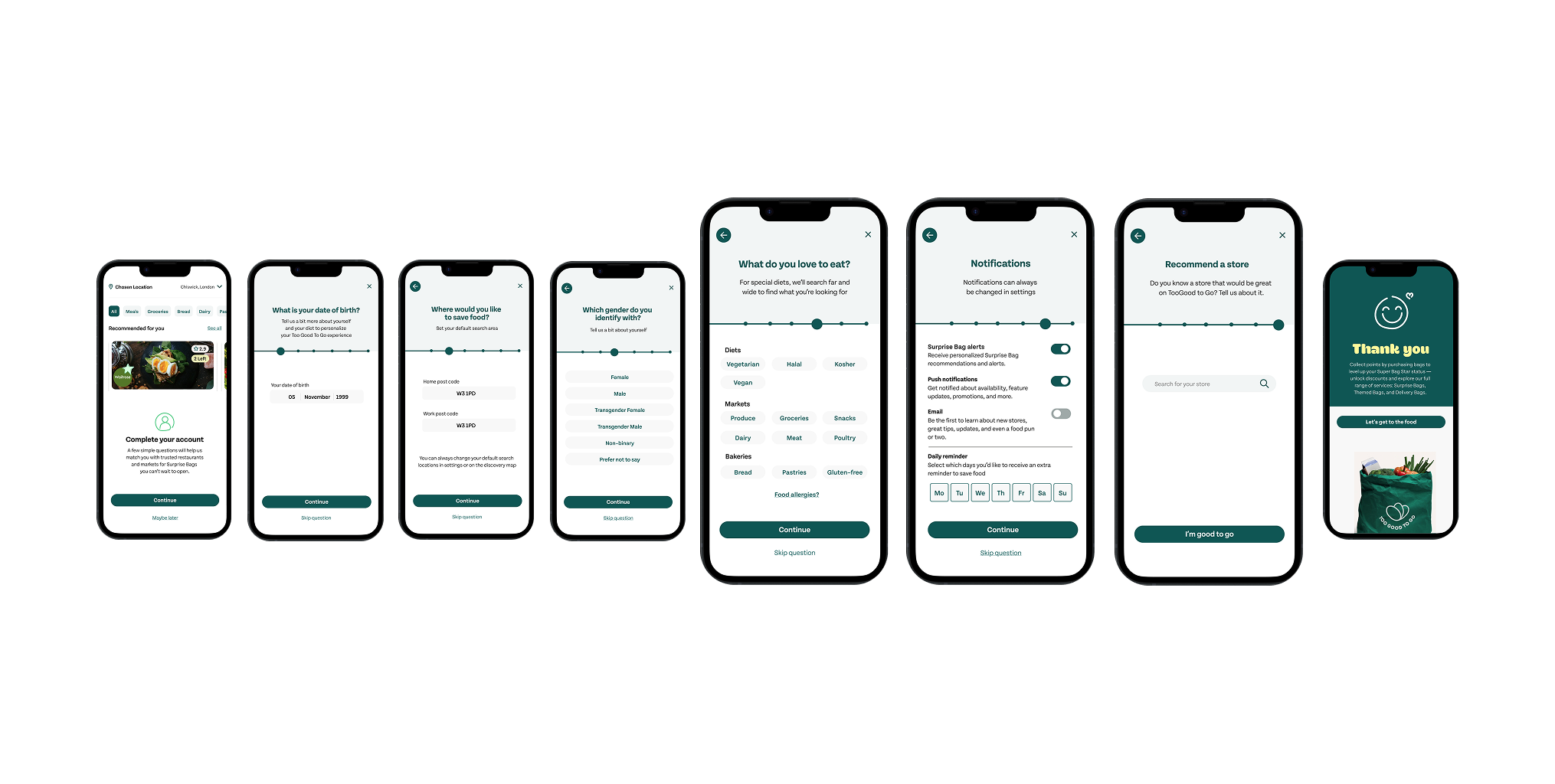
Onboarding Experience
Onboarding now personalises, guides, and supports users, boosting retention and community.

The power of Design Solutions
Project Sum up

- The Goal -
Help users connect with sustainable food choices, return regularly,
and feel part of a bigger mission.
- How We Supported It -
We designed Onboarding Flows, Visual Tools, Trust-Building Features, and Personalised Experiences that make saving food easier, clearer, and more fun.
- The Experience -
From Visual Bag Panel Previews to Recipe Ideas for leftovers, and Community Connections, every feature is designed to help users make more confident, conscious choices.
- The Impact -
Stronger trust and repeat use, fostering a loyal, purpose-driven community.
Next Steps
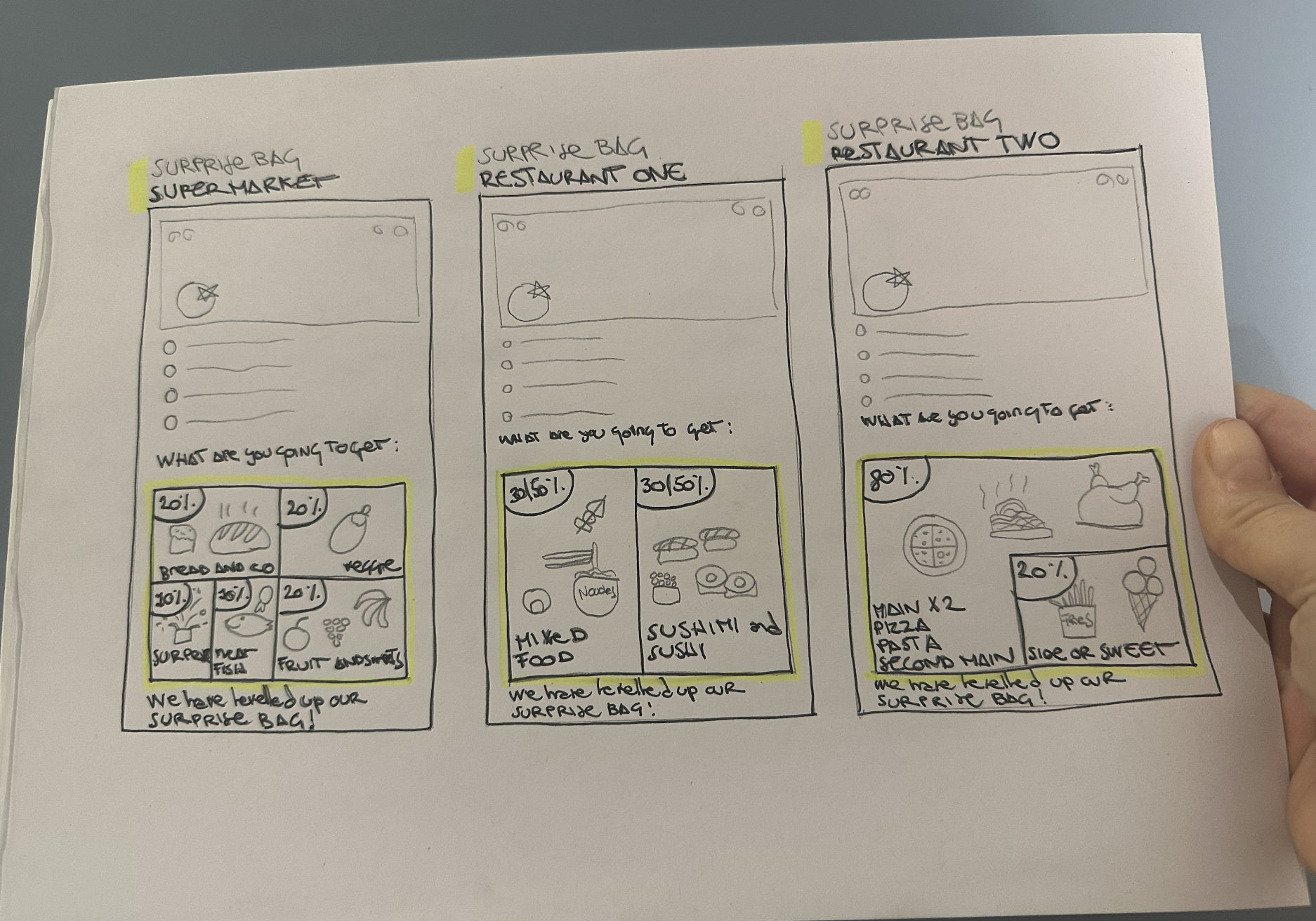
Extend the Visual Data Panel to other business types (sketched, not yet designed).
Include Private Chat Boxes that alert users to unusual bags or offer extra discounts.
Explore more gamification (streaks, levels, seasonal challenges) to boost engagement.
Review and improve accessibility across visuals, navigation, and copy.
Explore in-app translation for local business listings in different markets.
Introduce in-store stickers and QR codes to bring regular customers into TGTG.

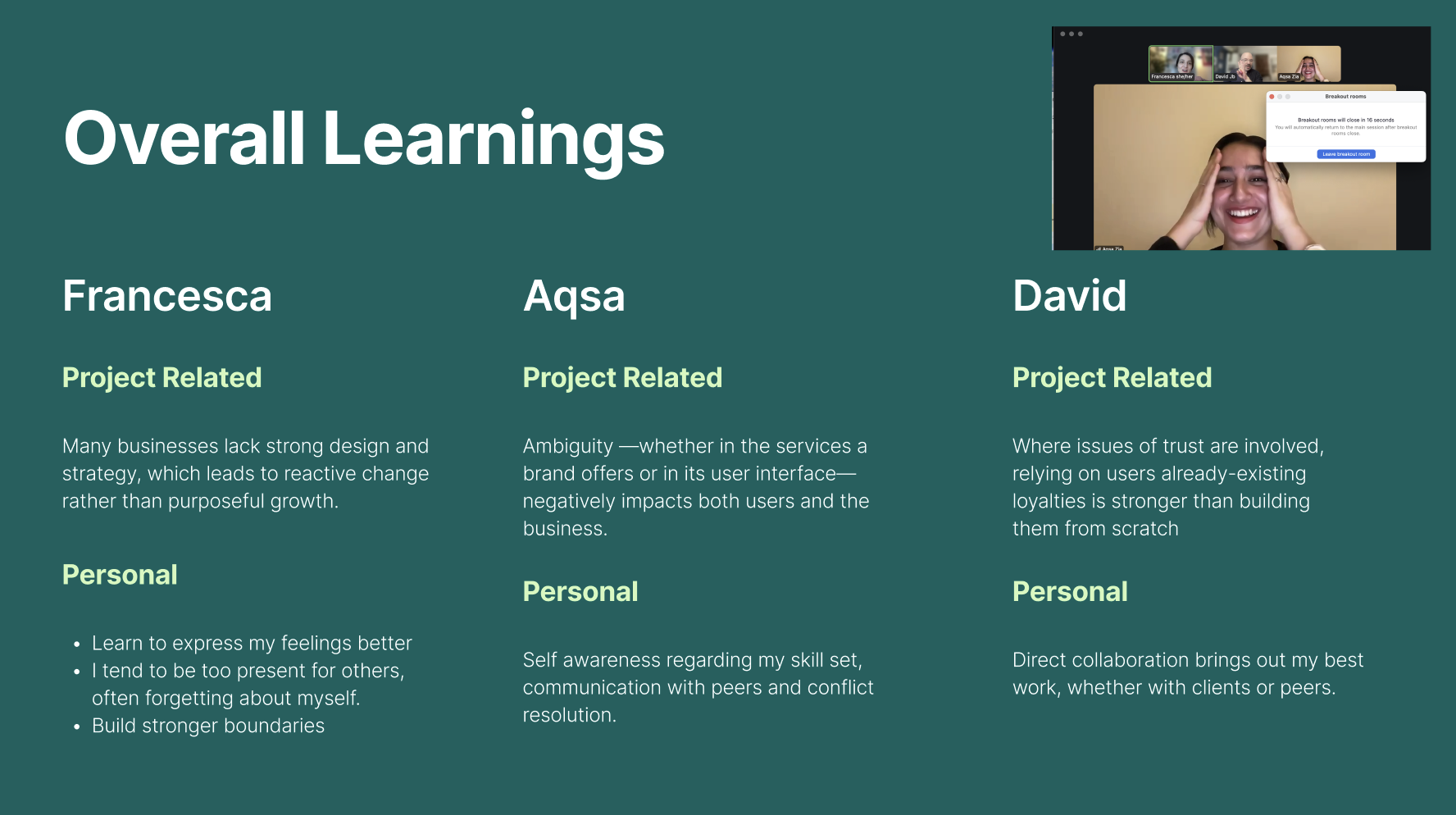
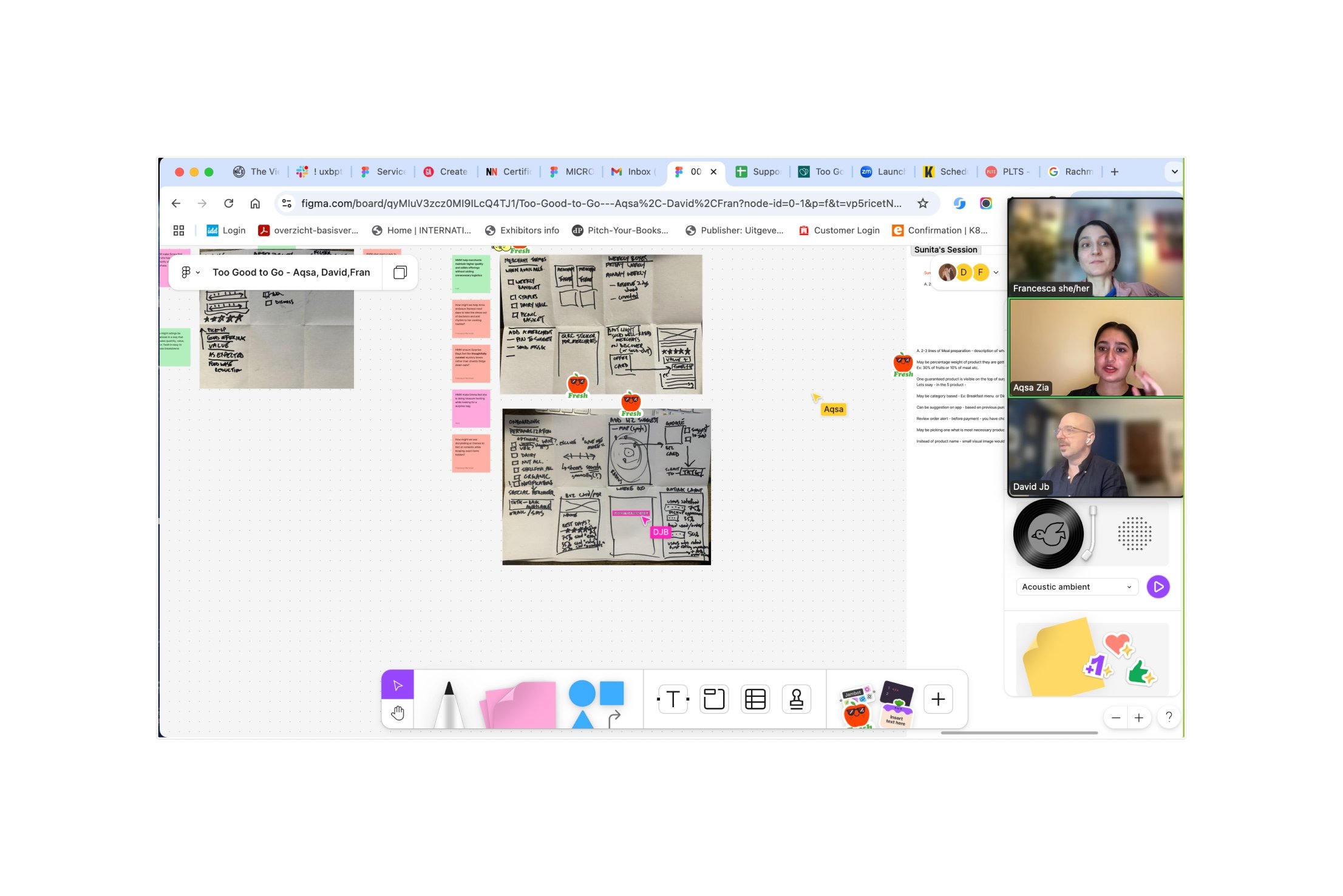
Behind the Work

More at Research
